Drawing: my work/reflection/research

One of the aims I had for this course was to get more confident in my drawing, and for this to become more instinctive for me. I have enjoyed as part of that exploring the one line drawing style of Calder, but here follows some more descriptive drawing that I have completed first in a recent workshop, at a life drawing class (my first!) and a cast study I did in the RA recently.
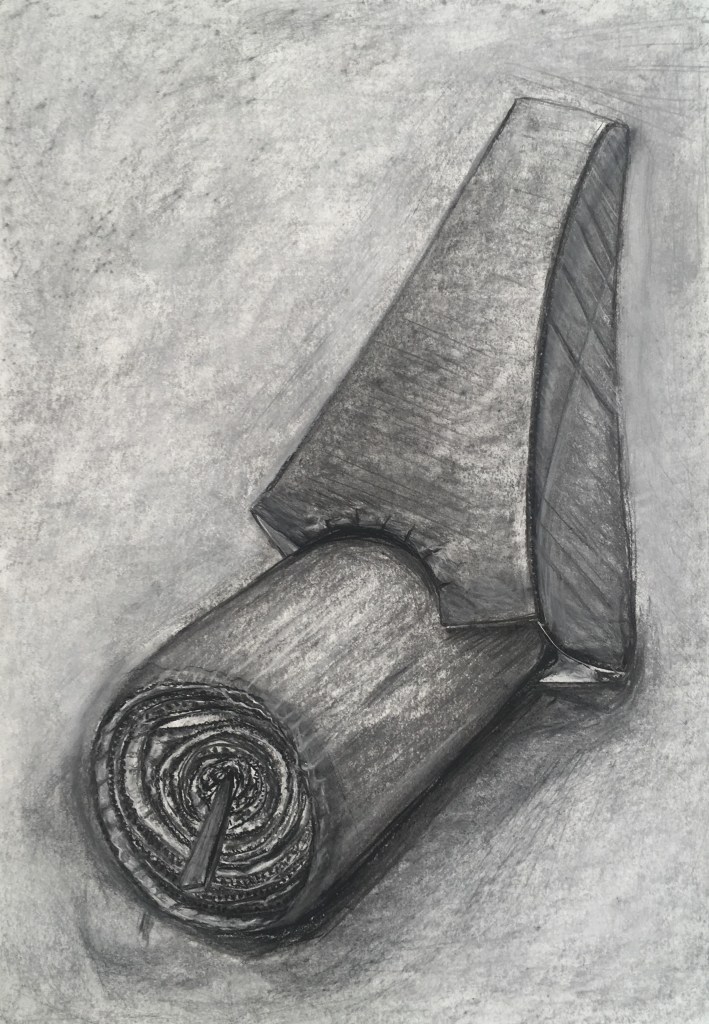
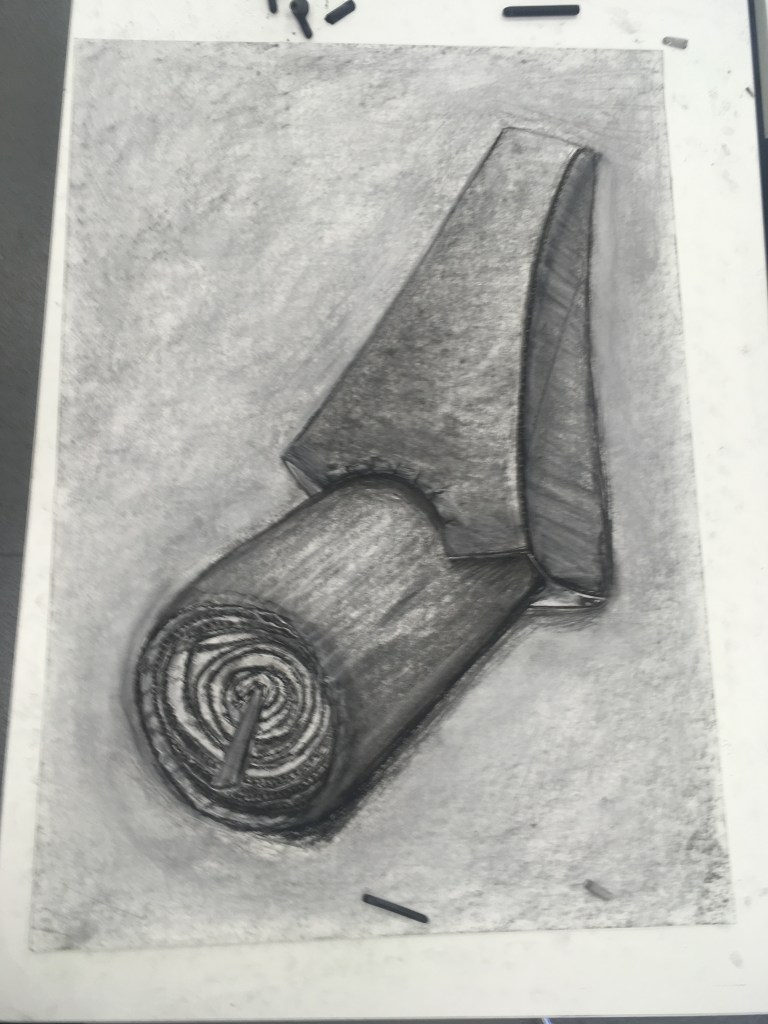
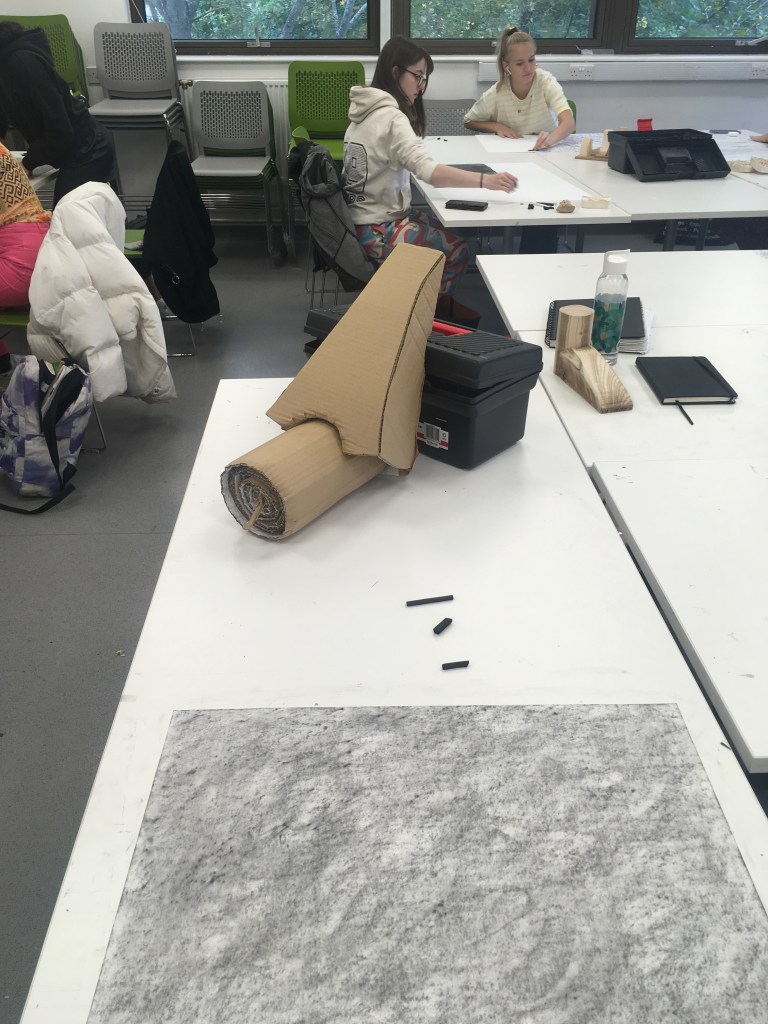
Charcoal/conte/chalk on paper – Study of my cardboard object from Gained in Translation

Here we were given a few hours to really study and work into our drawing – I had not before used this technique of building up a layer of charcoal to begin with, but I enjoyed how this made the process somewhat more malleable – it was forgiving to making adjustments along the way. I enjoyed also using chalk and different charcoals to add further depth and texture here. I found it difficult to get the perspective quite right on this and I think the top of the foot (the concentric circles) are not as occluded as they ought, but I am overall pleased with this work.

I chose this slightly altered pose for the object so that I could focus more on the interesting texture and tone of the top of the foot (the more interesting element for me). I felt that otherwise my work would be too generalised to warrant the length of sitting!
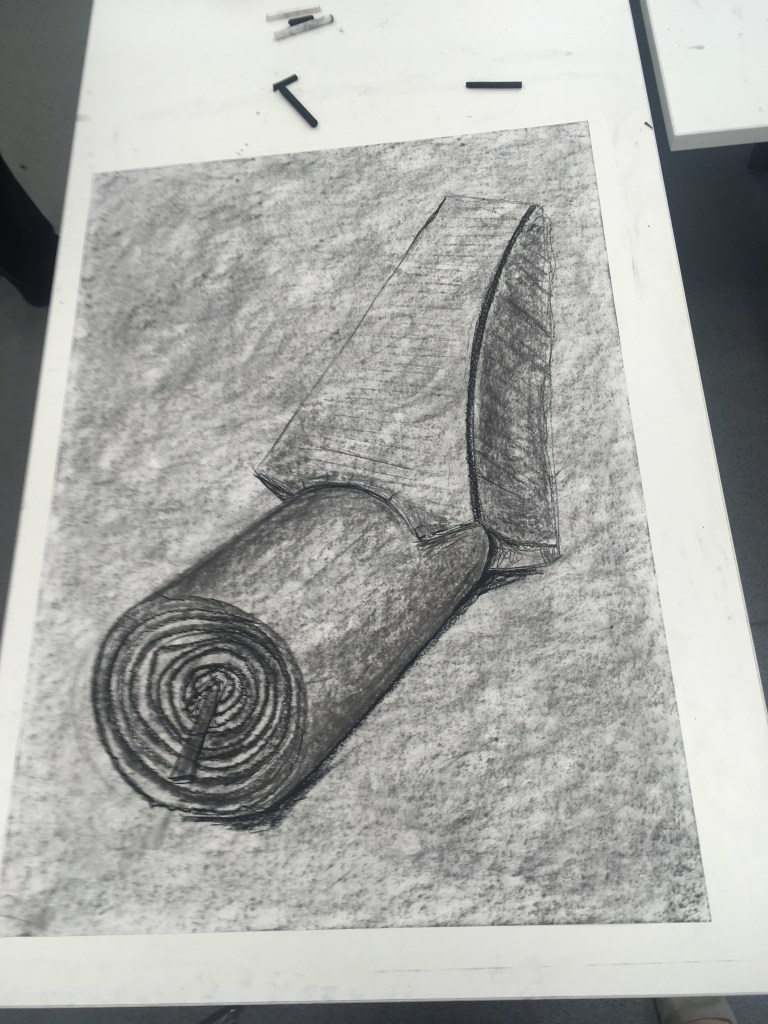
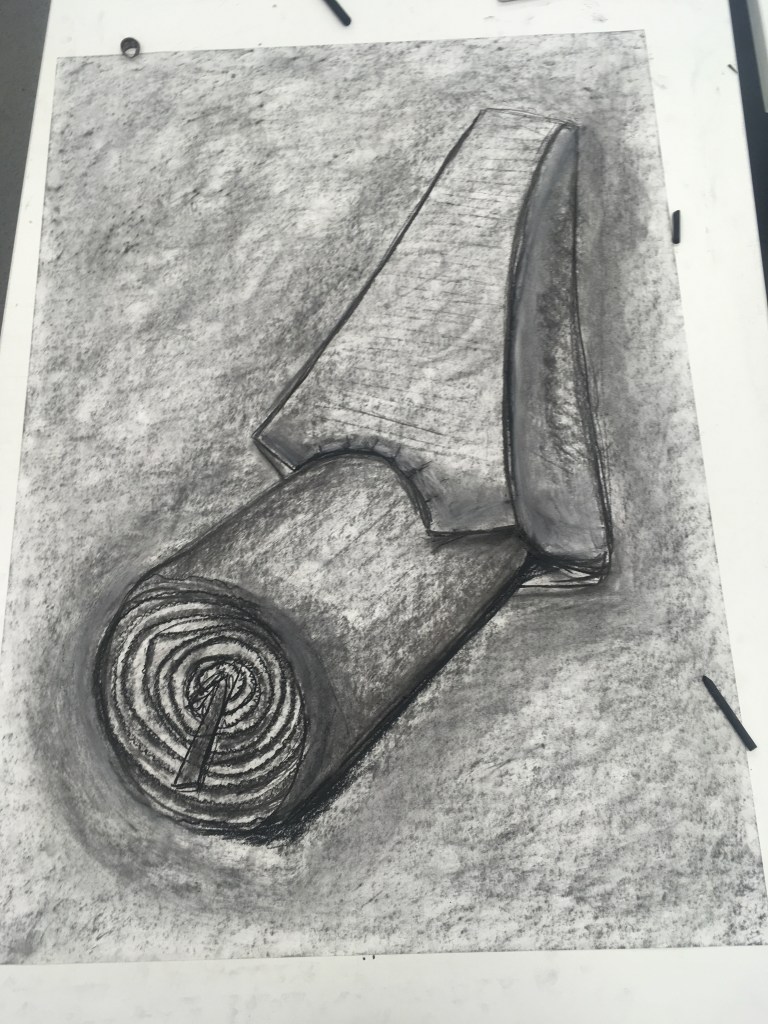
I enjoy working with charcoal for the responsiveness to weight and immediacy you have with it.
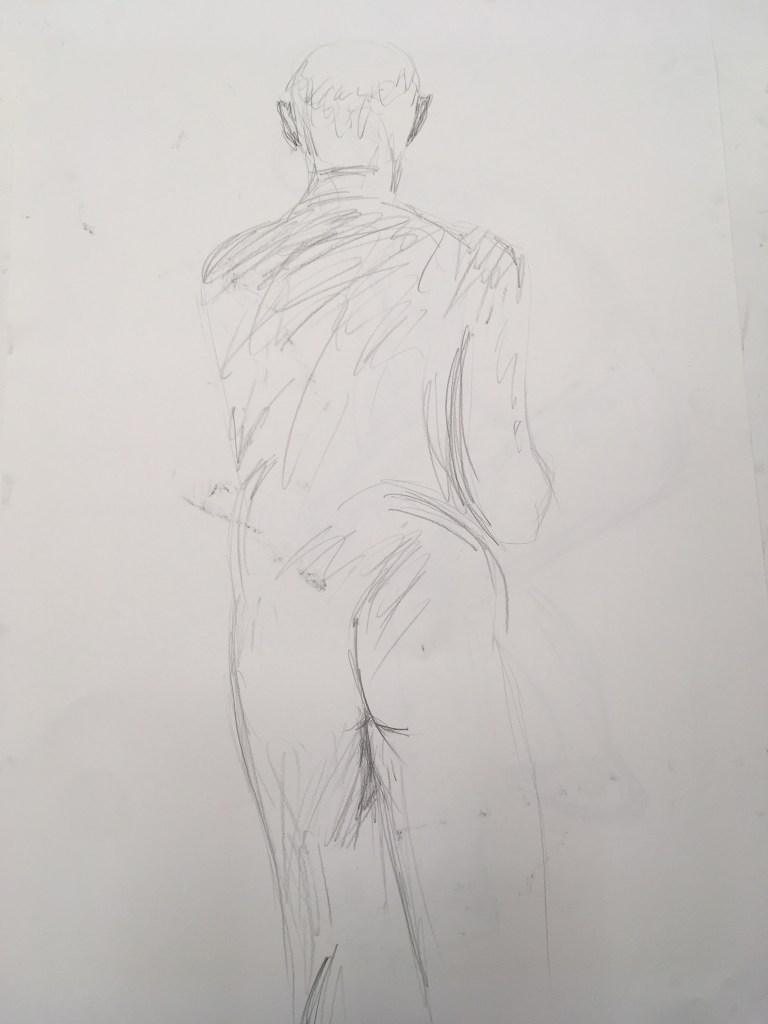
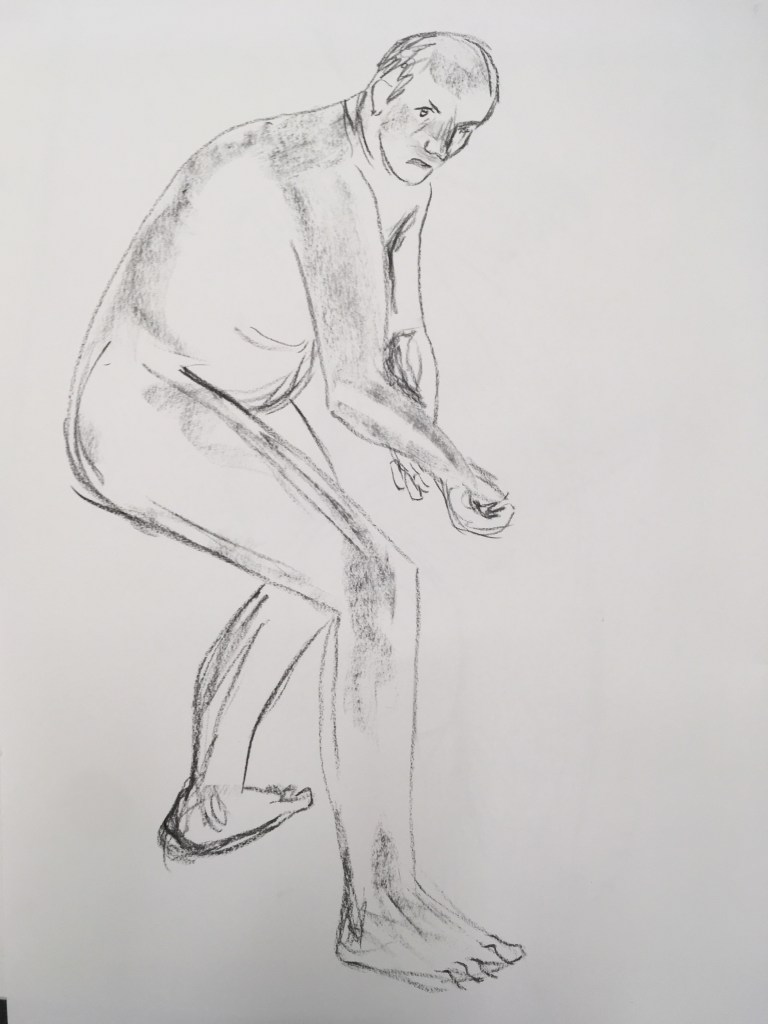
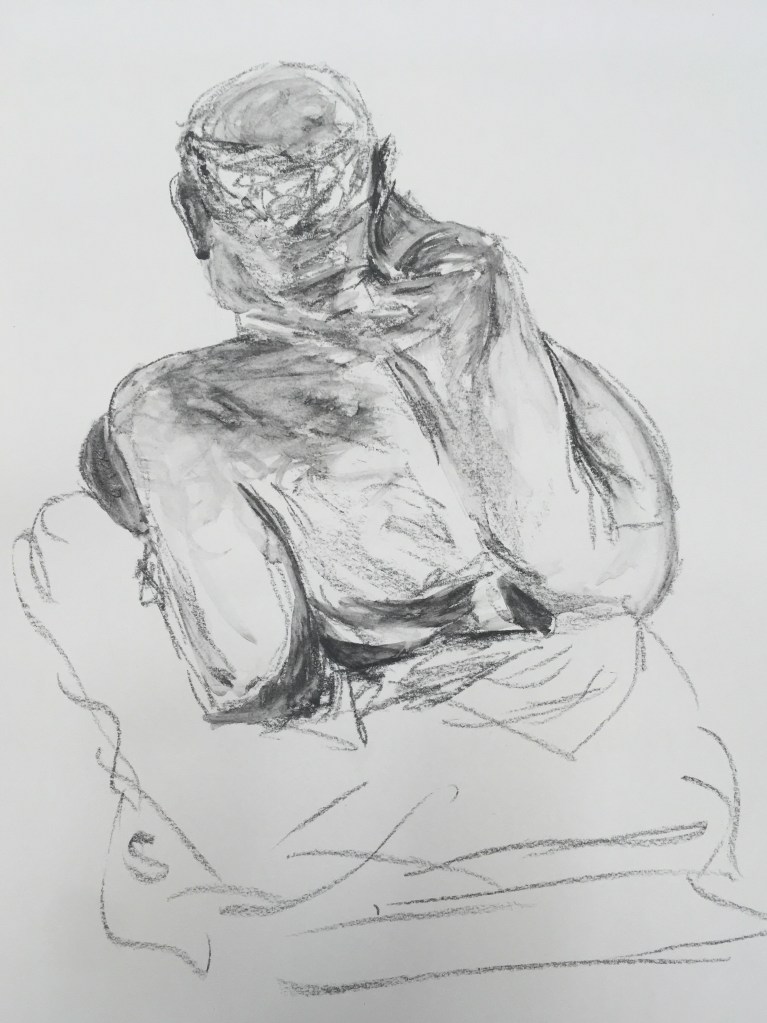
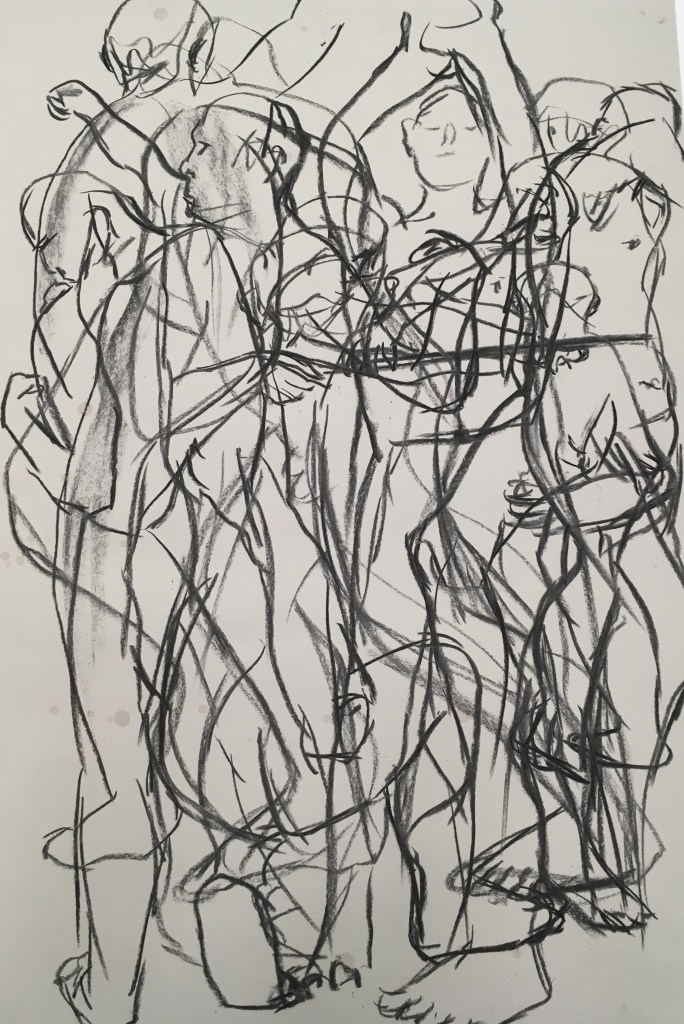
I enjoyed the life drawing class, though found it very hard going! Working at pace in quick succession was quite the challenge. I enjoyed experimenting with the soluble graphite stick (which I had not previously used) for the tonality you could achieve quite quickly and the sketchy quality you still achieve. I am most pleased with the 10 x 2 min sketch charcoal piece though. I think this allowed me to release my inhibitions somewhat and be more confident in my lines firstly since there was a time pressure, and secondly since I knew that in overlapping them any ‘errors’ might be obscured. I enjoyed in this experimenting with dynamism and scale and the more successful elements are towards the bottom of the work I think where you see the legs. I’d be interested to try this approach again but using the one-line drawing method.
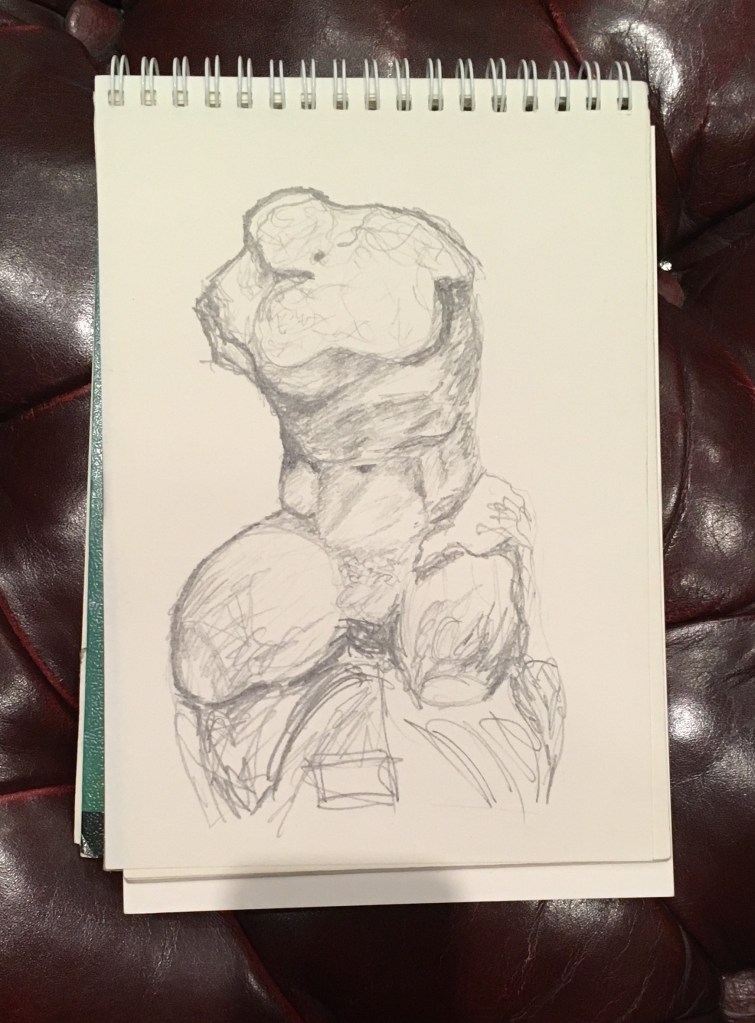
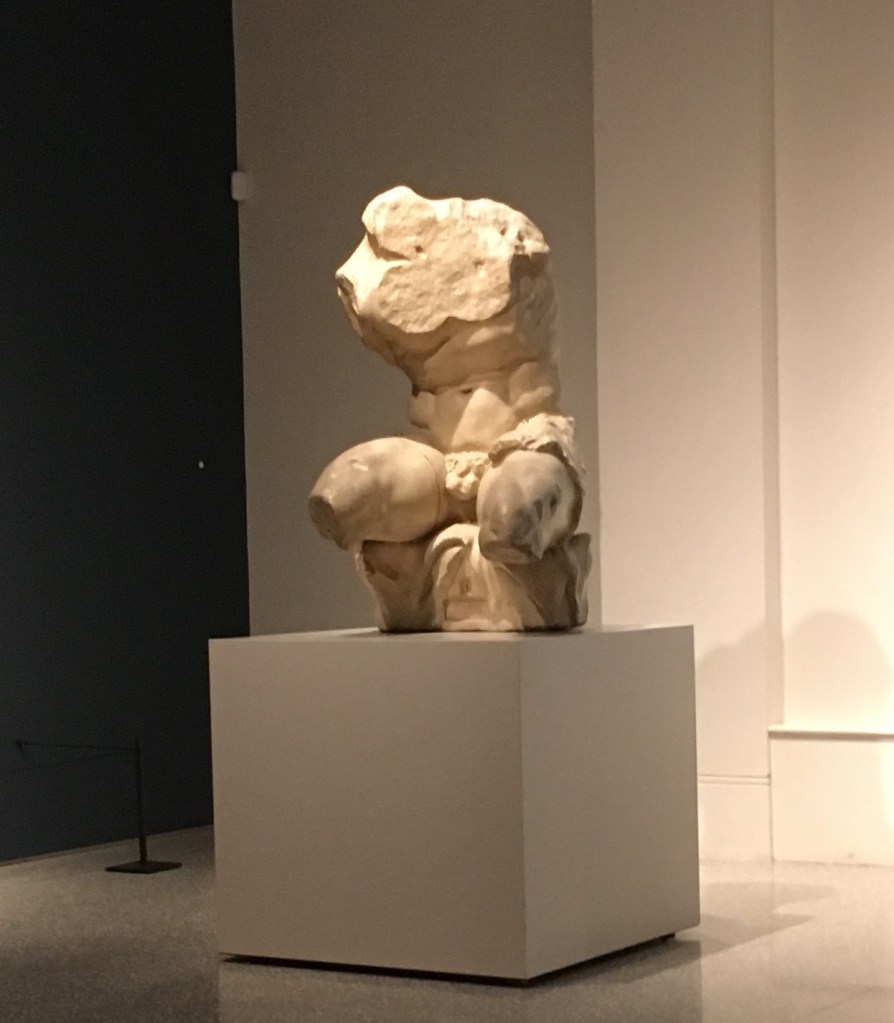
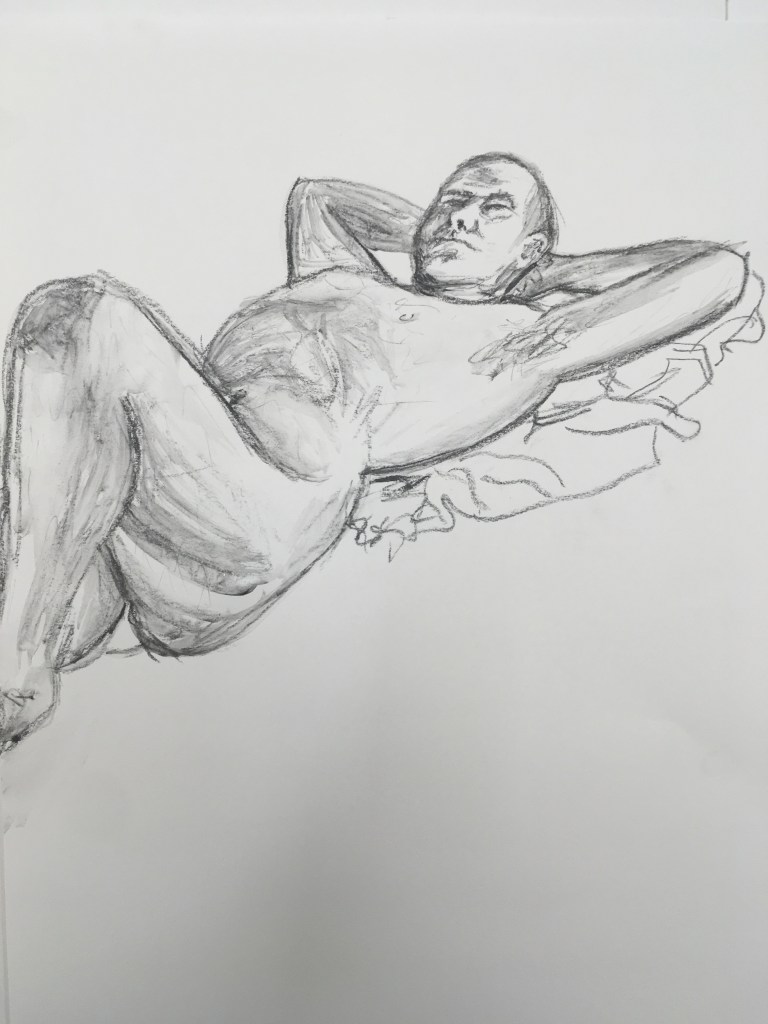
I am pleased with the tone in this piece, though I think here too my perspective could have been refined (i.e. more hunch to the left side/proximity of the torso to the thigh). I perhaps self-edited here once more and did not fully capture the tonality of the genital region..! I was a little conscious of being in public at that point.
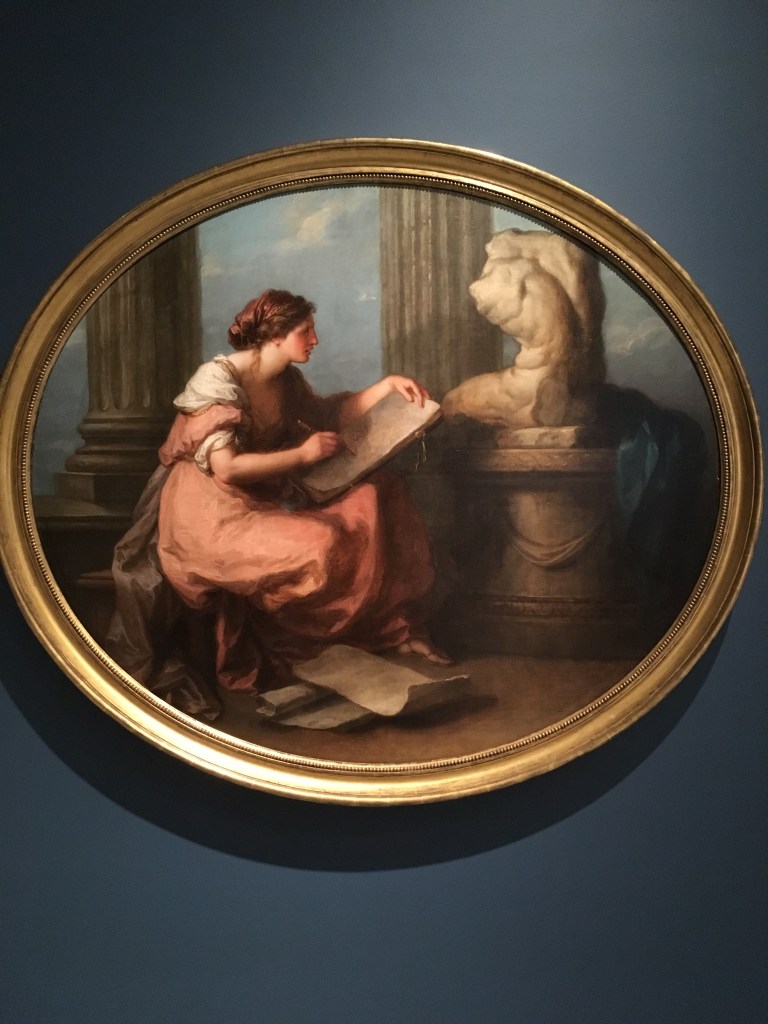
Angelica Kaufmann, ‘Design’ c.1778, RA Collection

As I was leaving the Collection having completed my study of the torso, I was struck by this painting for depicting what I had just done myself!
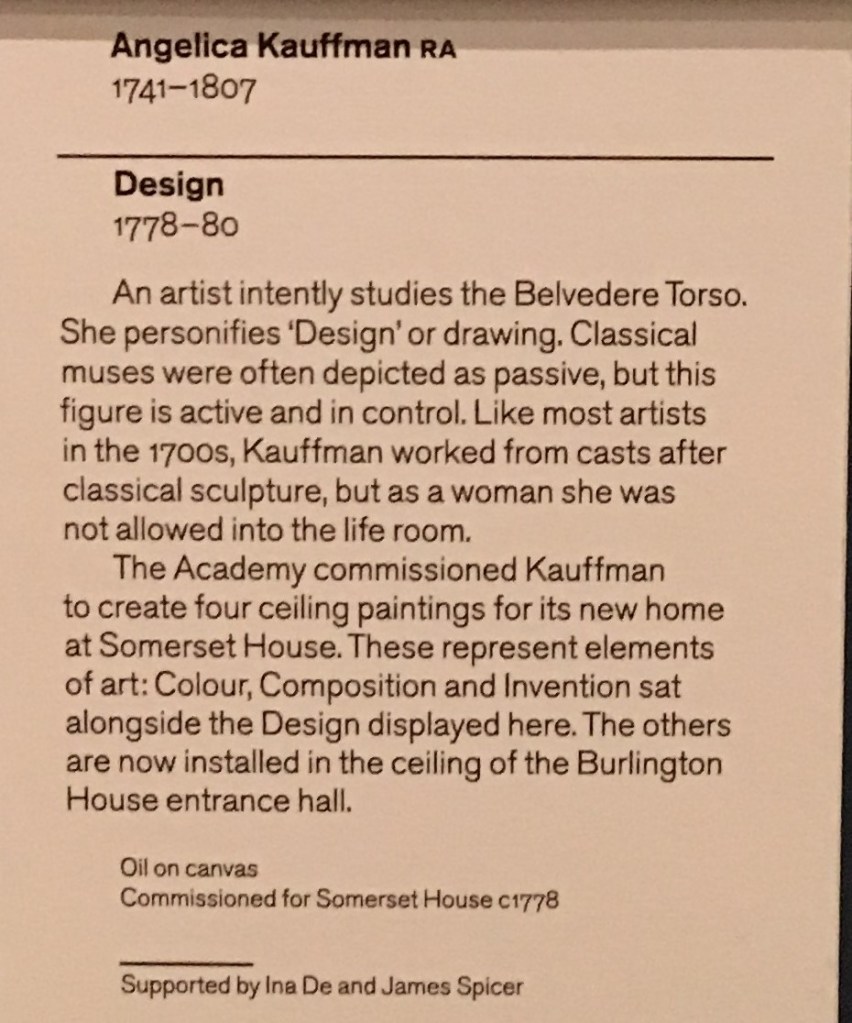
Exhibition notes for the above painting

I was particularly interested to read here that women were not allowed to draw from life at the time of this painting, and so had to study from casts of classical sculpture. This would certainly have been a hindrance to the development of their craft. I would be interested to learn more about the challenges women faced in art history and the broader picture of why they went unrecognised.
Play: abstract use of objects – Research/my work

I was reflecting the other day about how several of the workshops we undertook in consideration of Dadaism and chance was in using objects in unusual ways/reducing them to their forms.

This reminded me of an artist I followed on instagram, Christoph Niemann (@abstractsunday) who illustrates for the New Yorker. He has an interesting TED talk which I include below, which discusses precisely this, and the role of the audience in visual communication (without recourse to cliche). I also enjoyed hearing about how this allows simple images to communicate complex ideas, even emotions – we fill in the blanks. The picture only need suggest enough.

I particularly enjoyed learning about his strategy here, in choosing an object from his home and reflecting on it for some time in how it might be portrayed differently.

The real magic doesn’t happen on paper, it happens in the mind of the viewer. When your expectations, your knowledge, clash with my artistic intentions.

Christoph Niemann, 2018

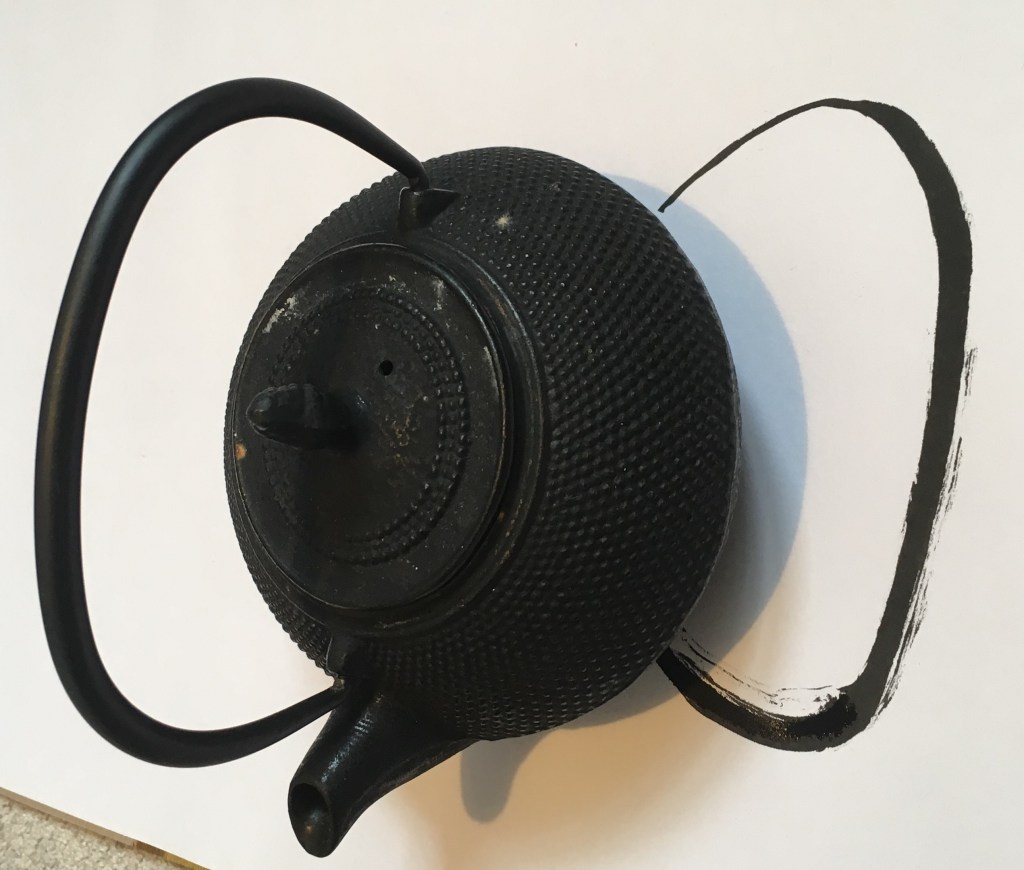
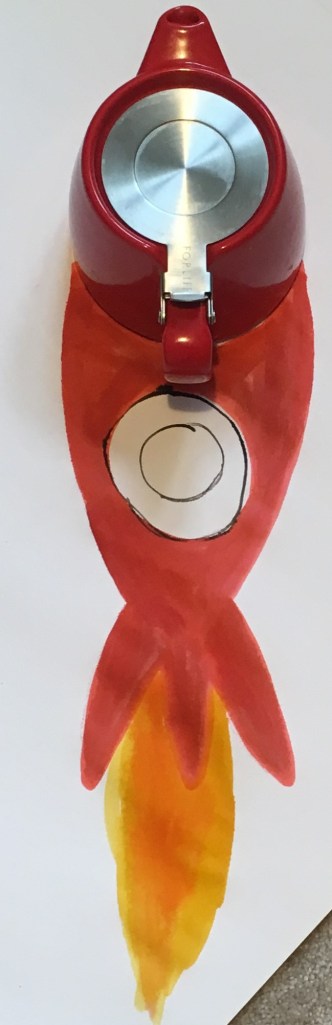
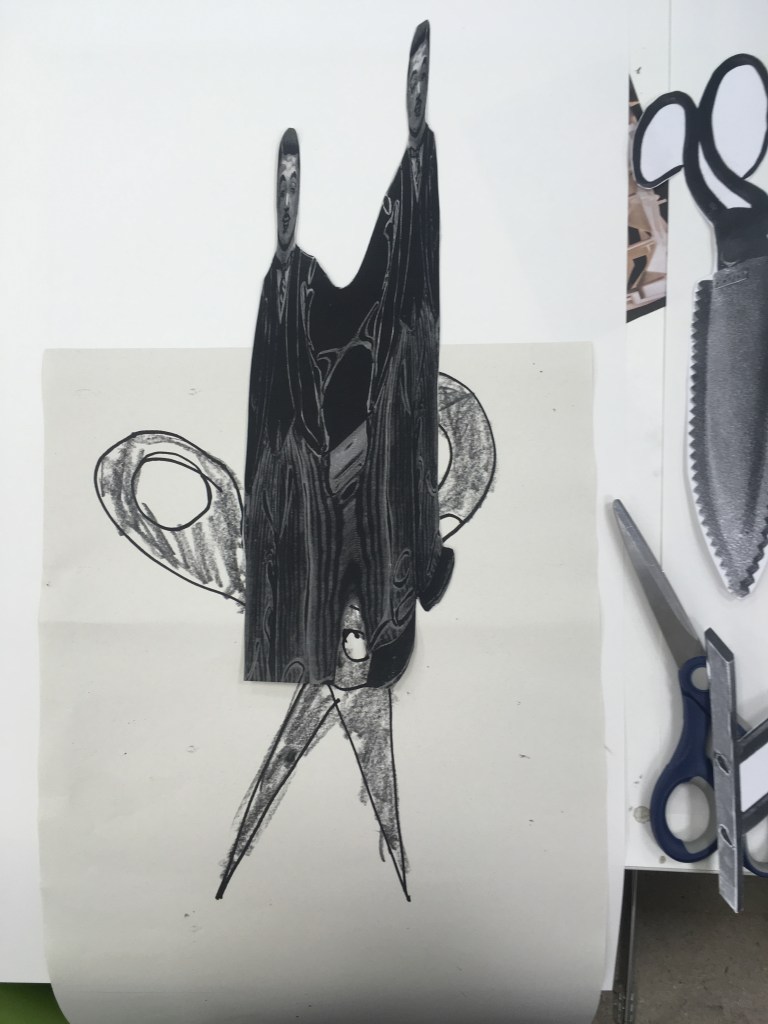
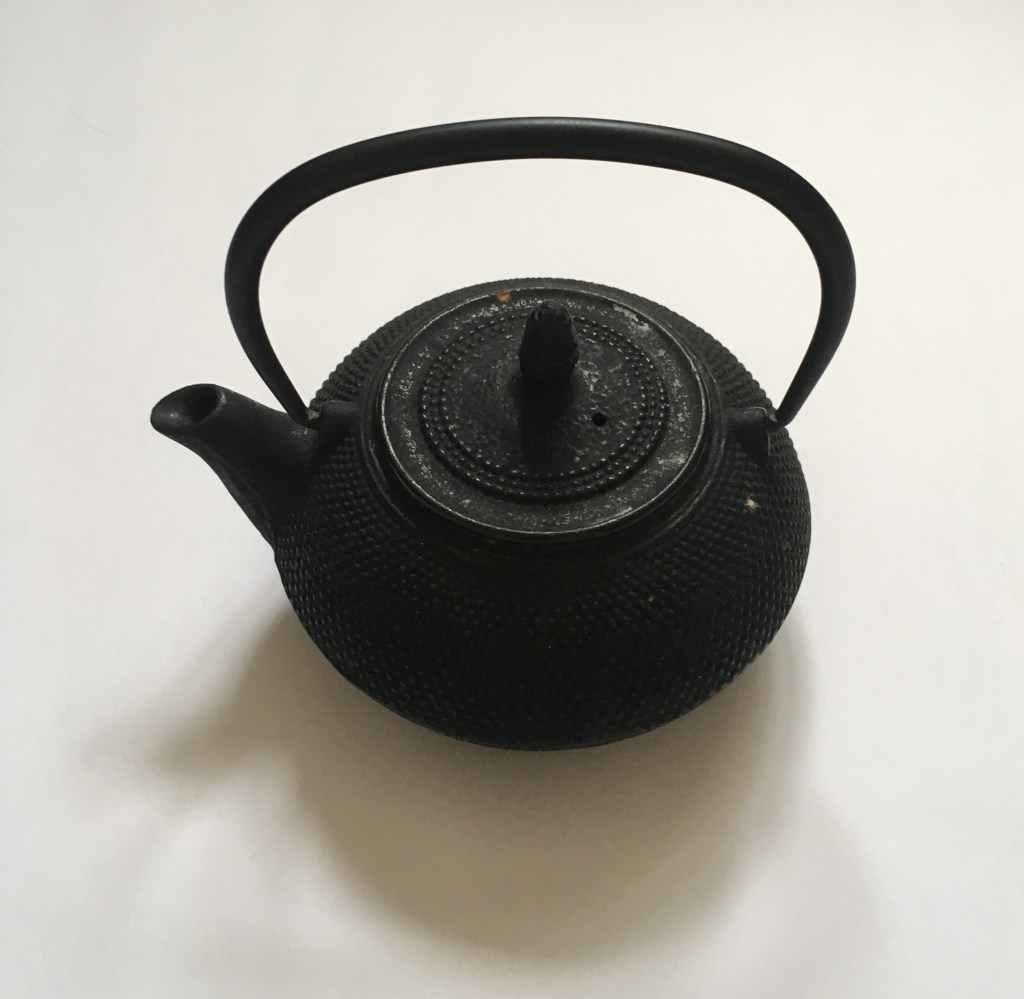
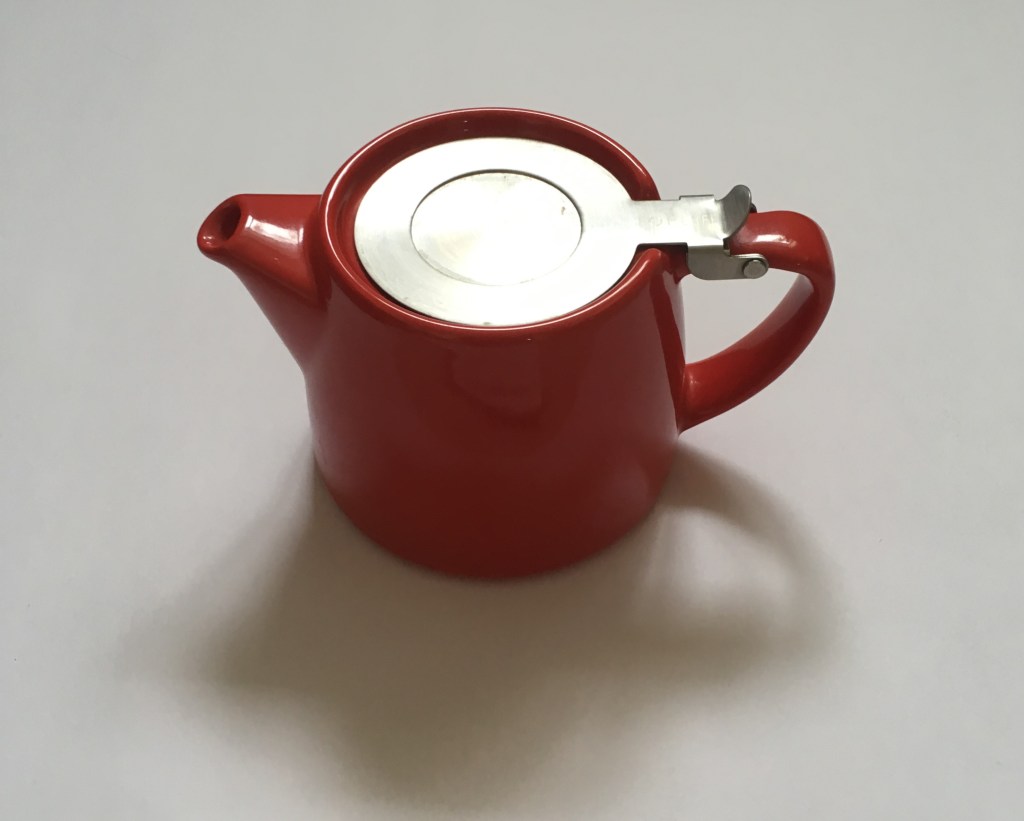
I am interested to use this strategy for myself. Following the success of my teapot figure I wondered about using one of the teapots I have at home.

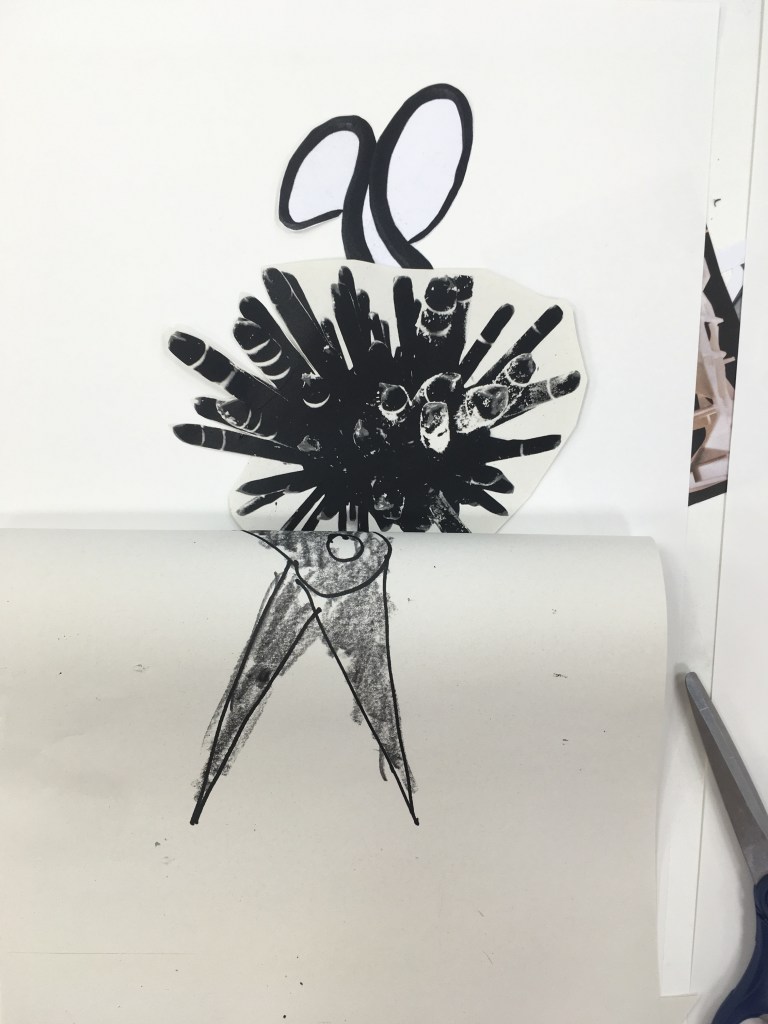
I like these abstractions – I think I could develop them further and take better into account the space around my drawings to ensure I can best document the intended perspective in my photography (without going off the edge of the paper! Here I used A2 paper, but perhaps A1 would be better, especially when using sizeable objects.

The use of ink felt right here, as Niemann uses, as helps for quick sketching, but collage might be interesting too.

Play – Exquisite Corpse: Critique/my work

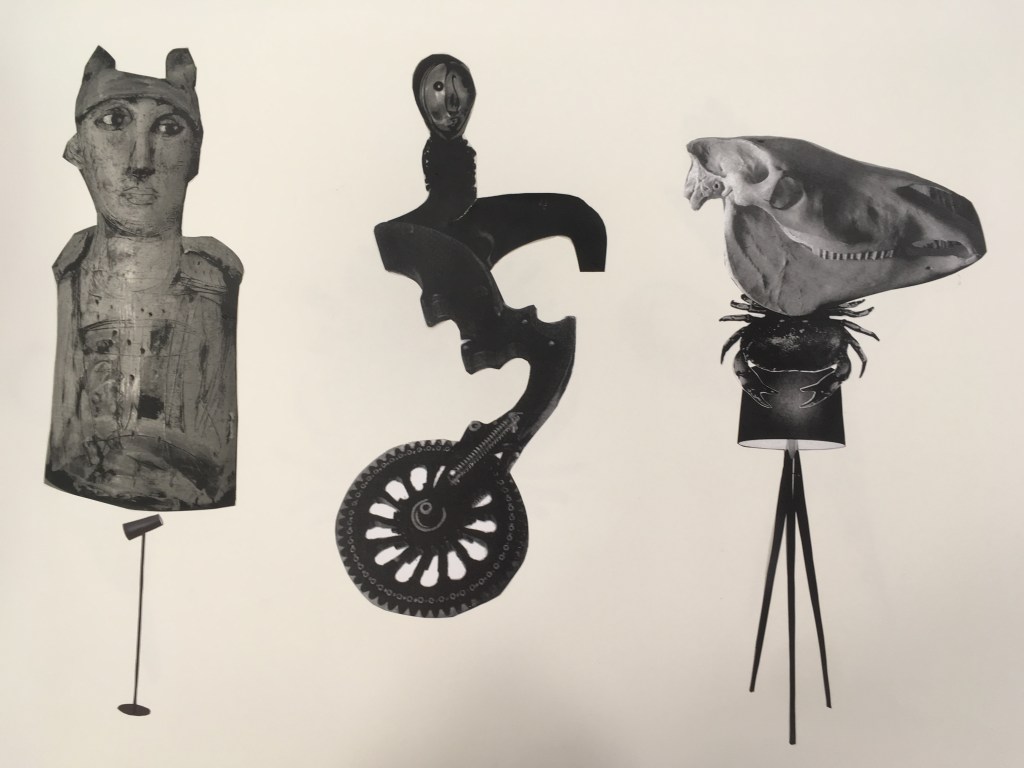
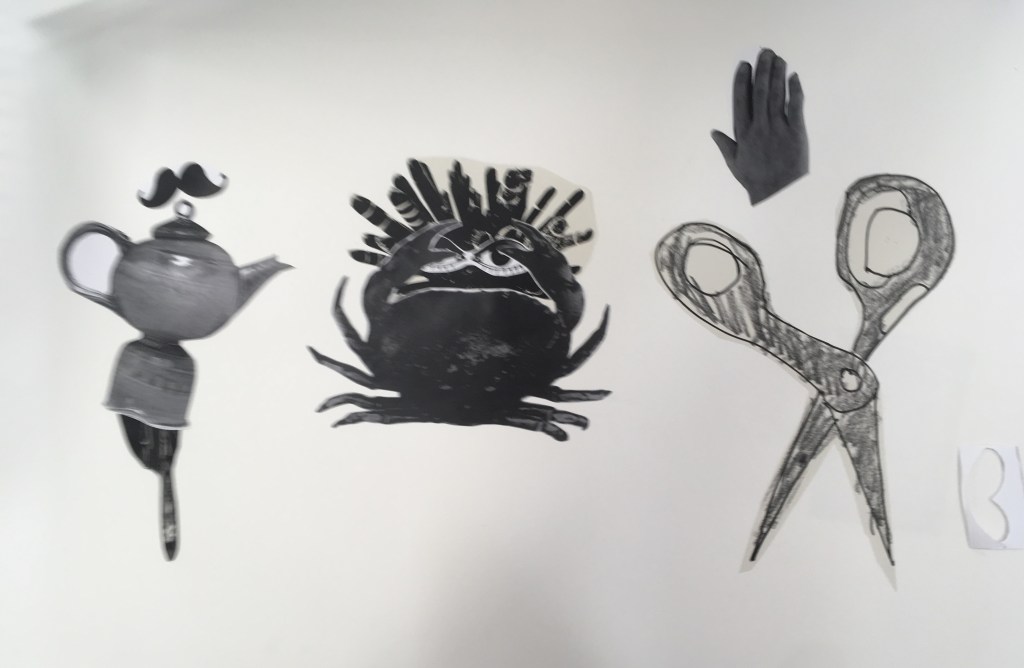
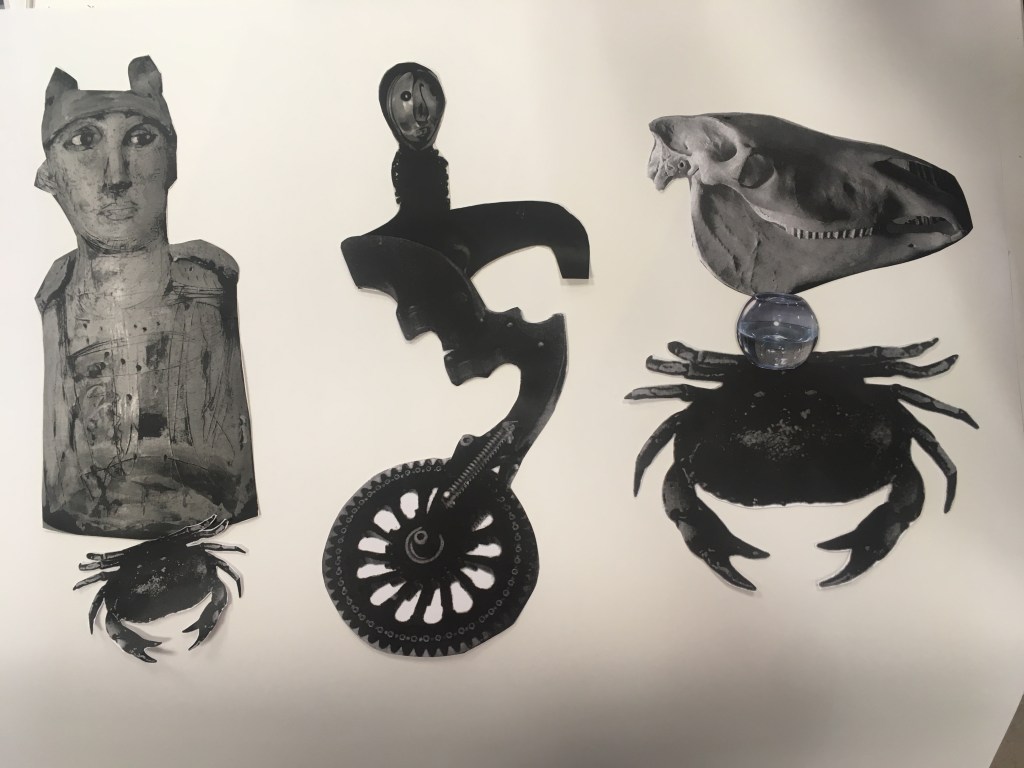
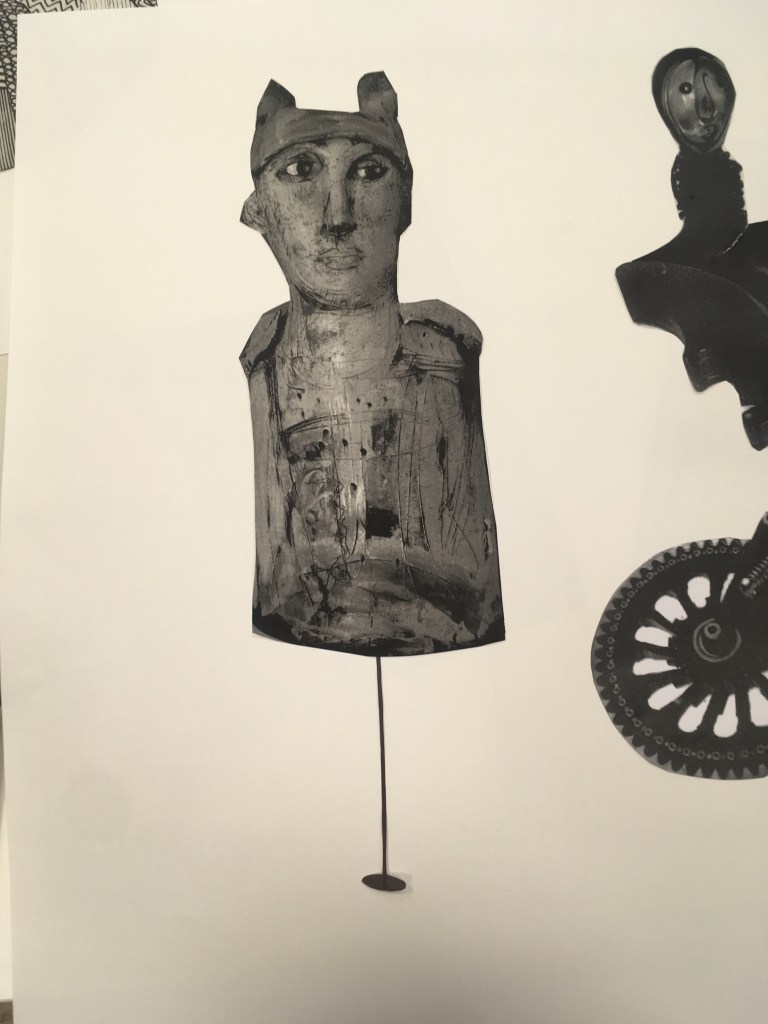
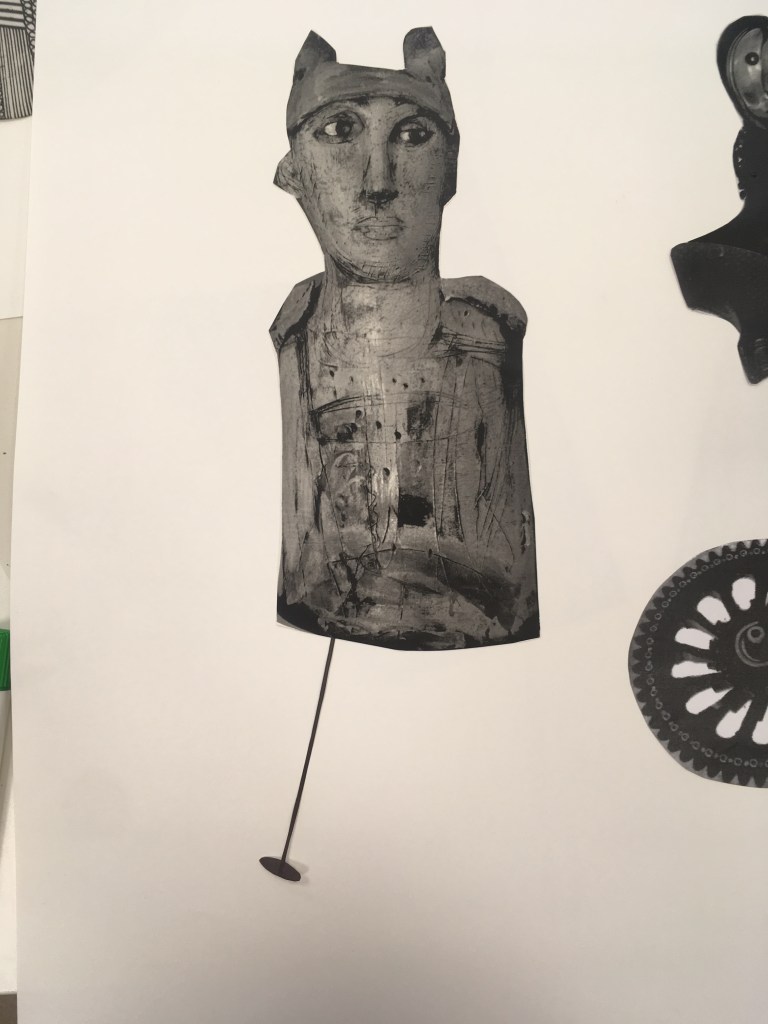
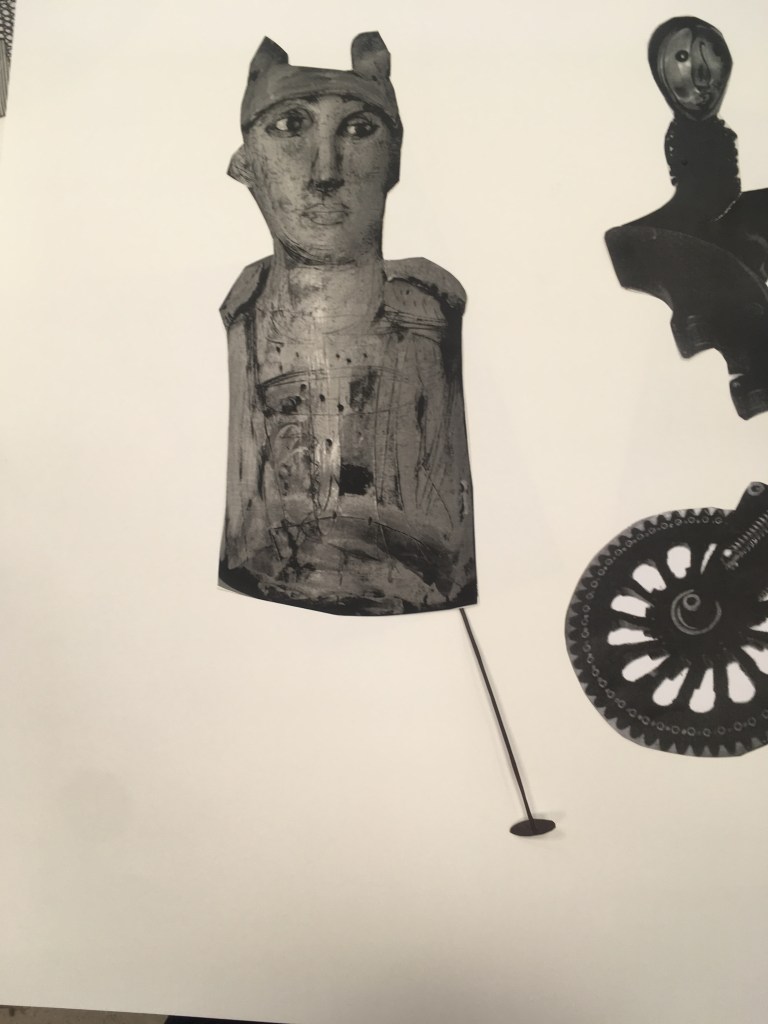
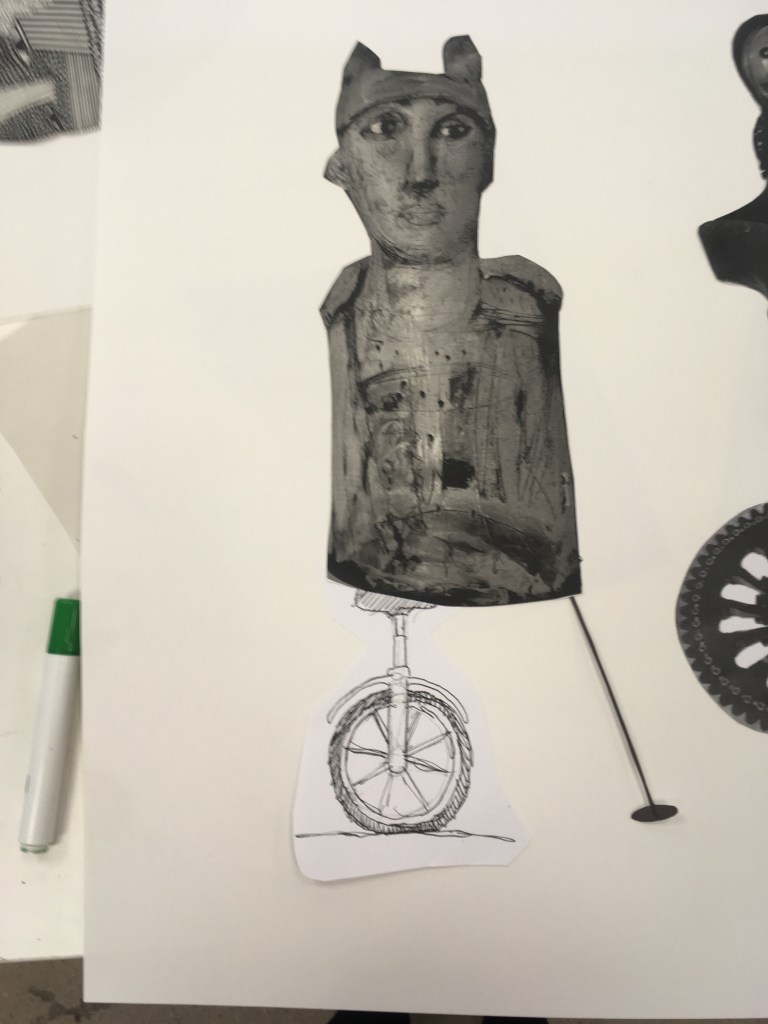
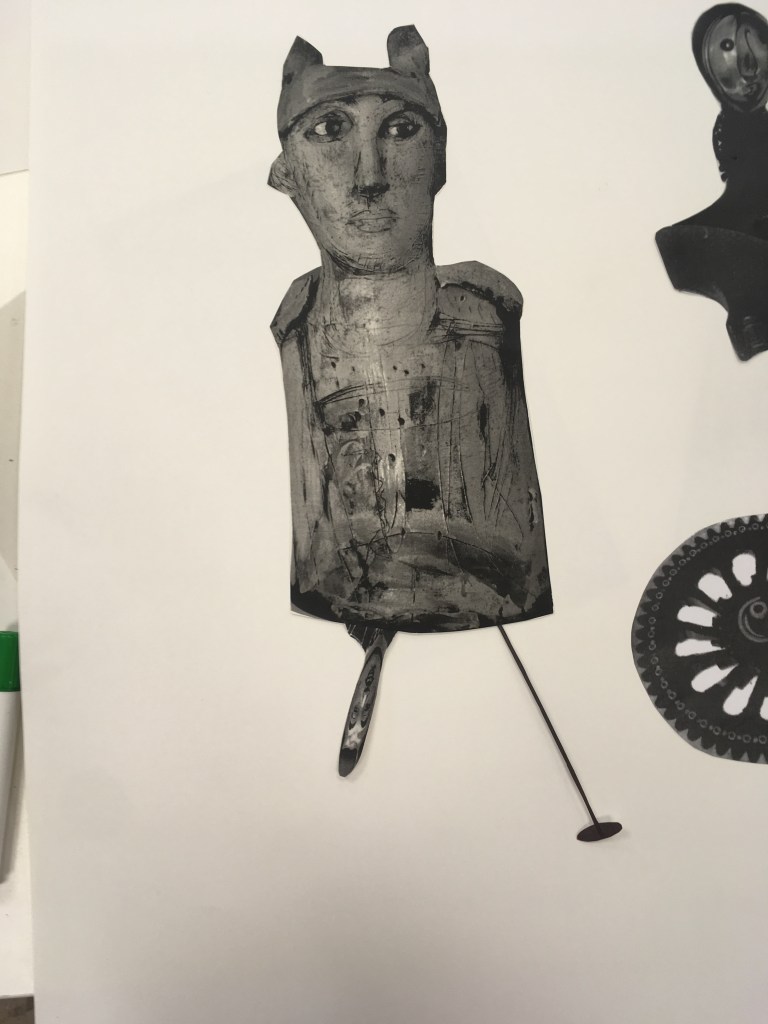
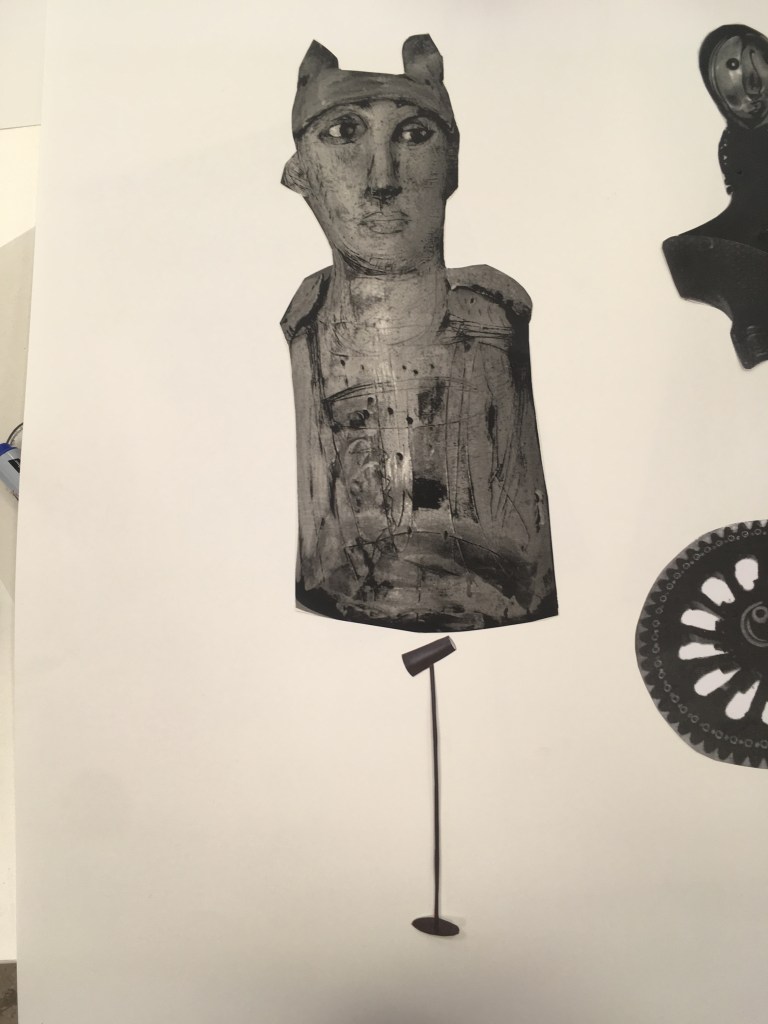
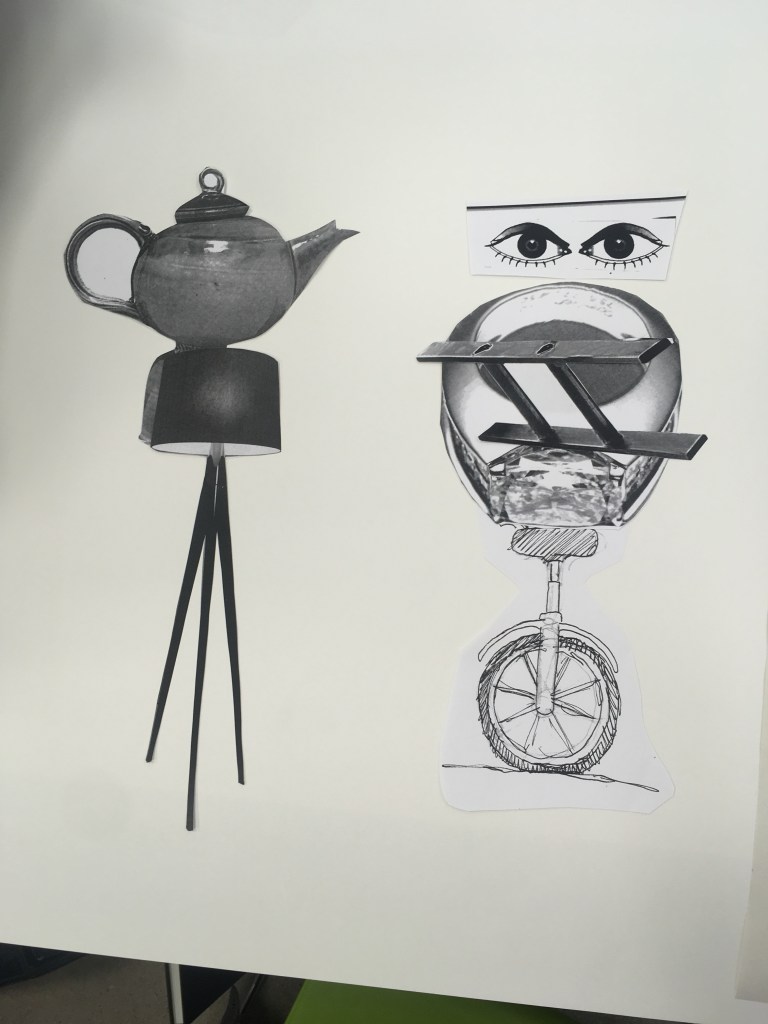
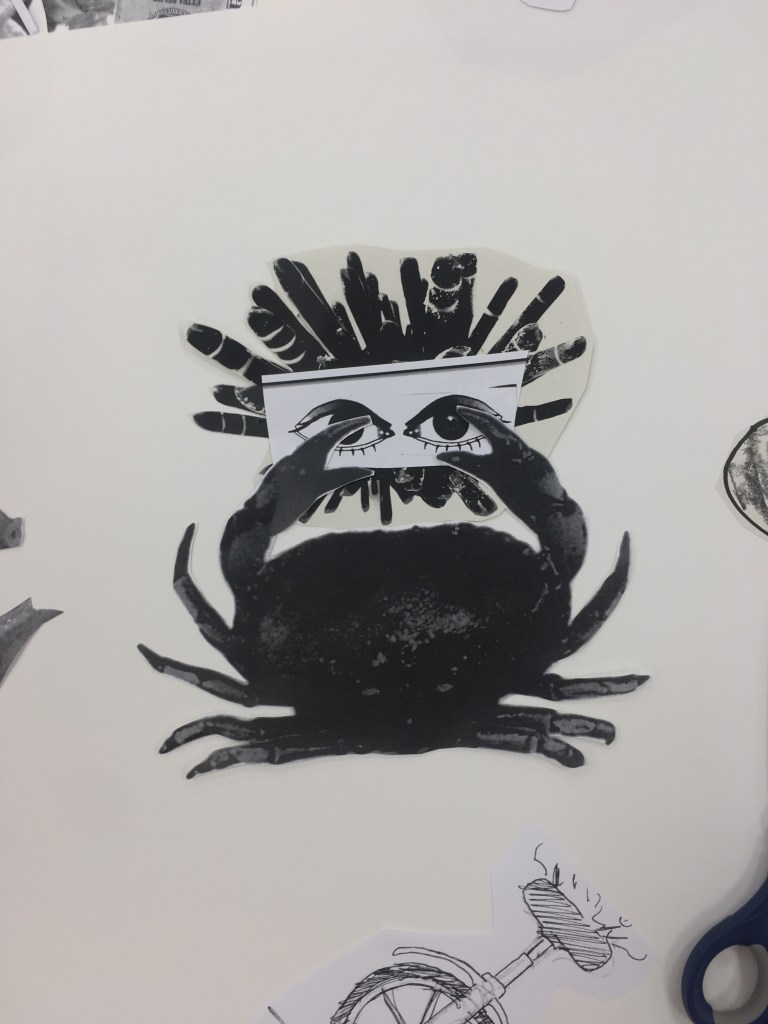
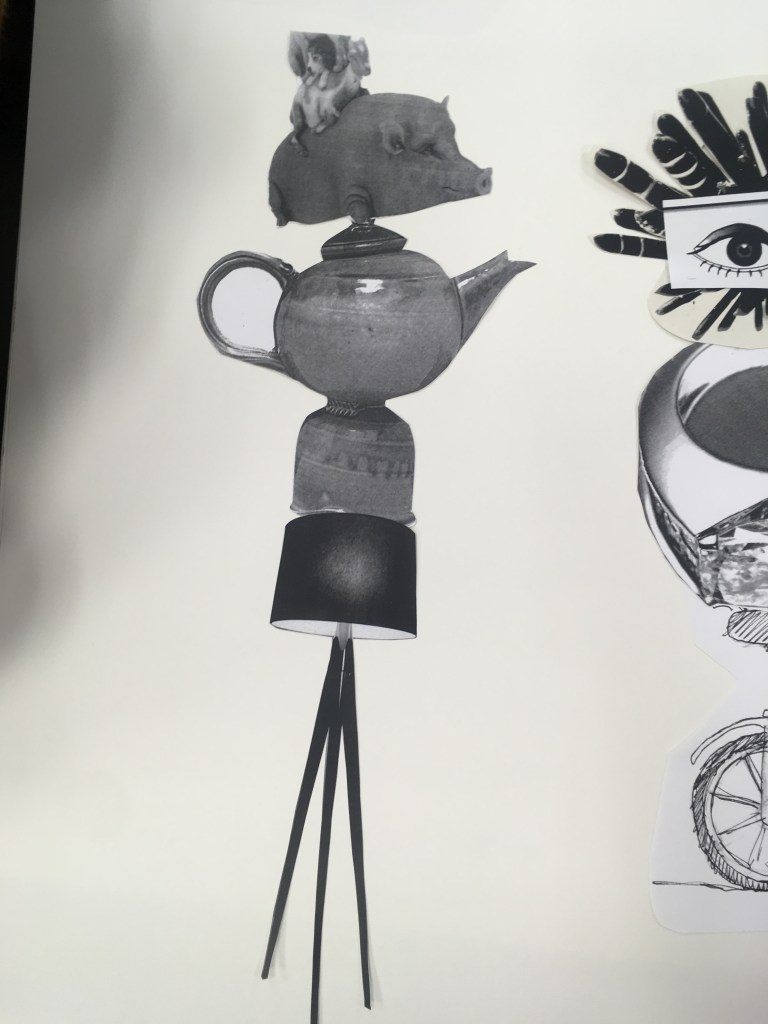
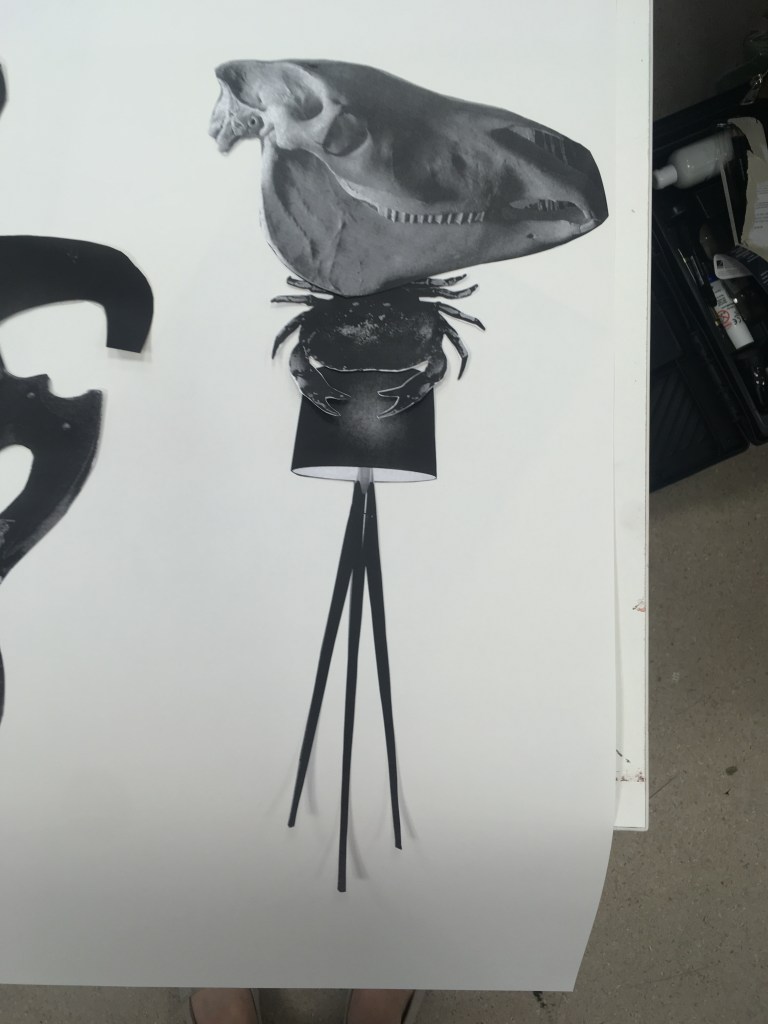
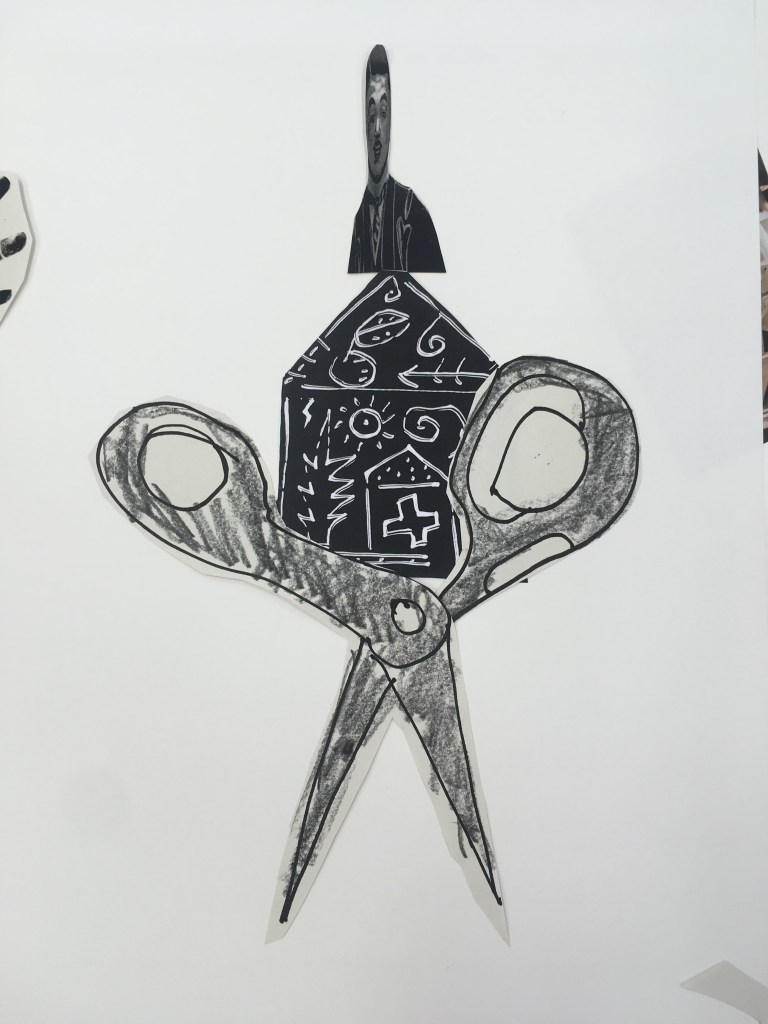
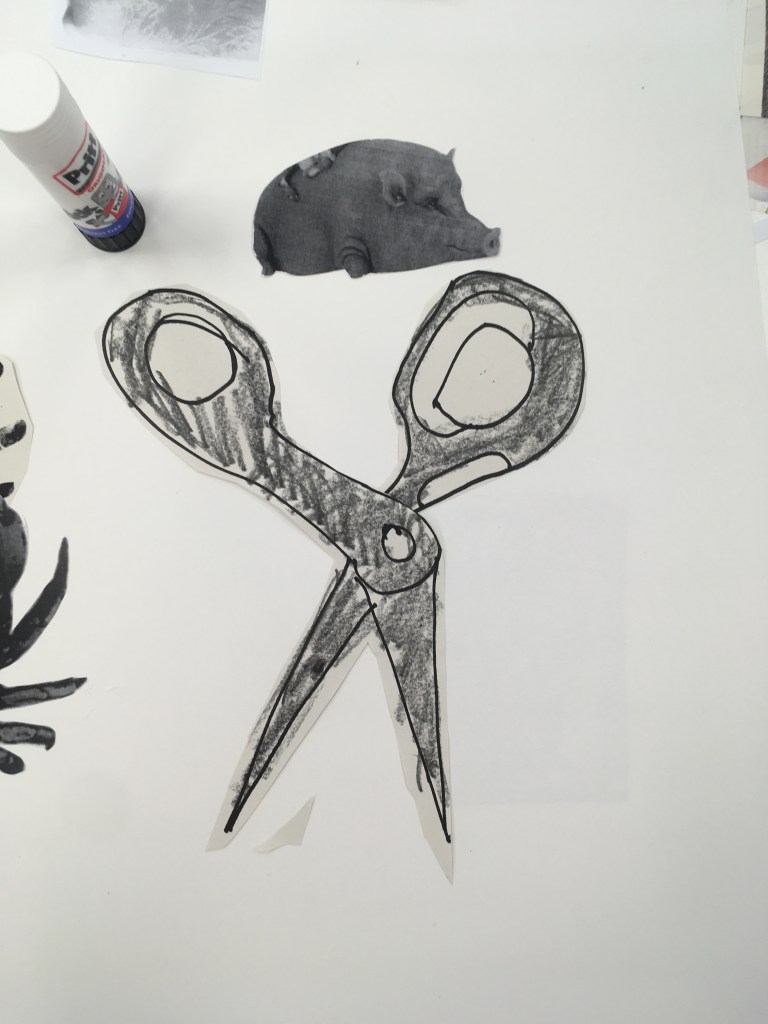
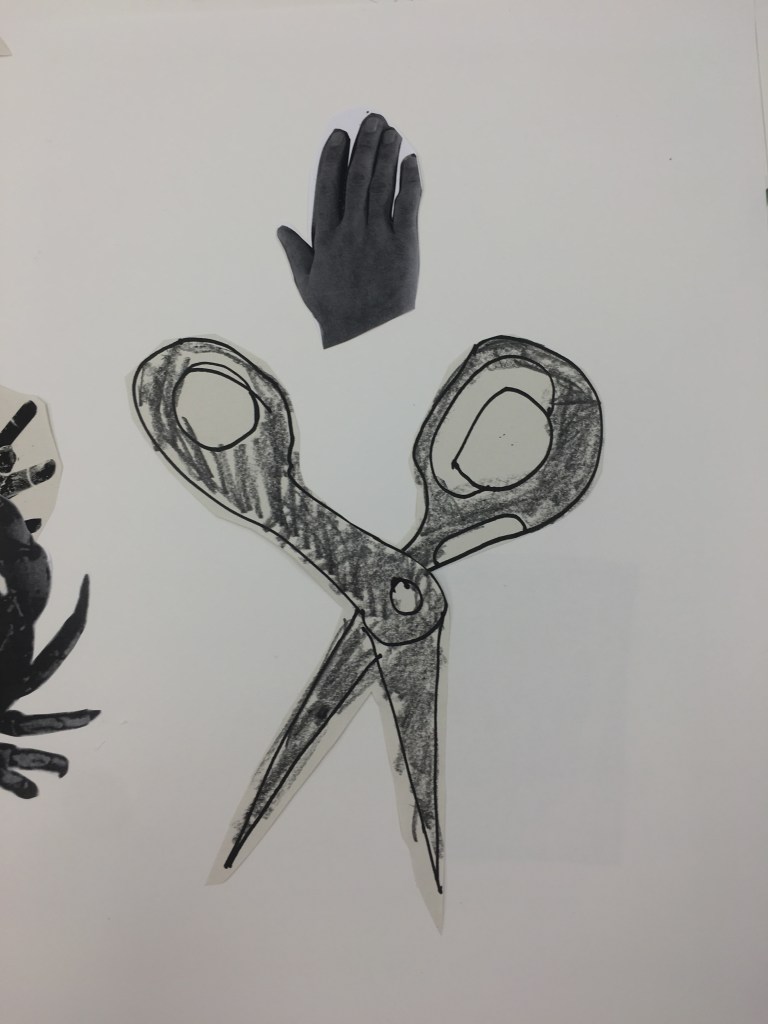
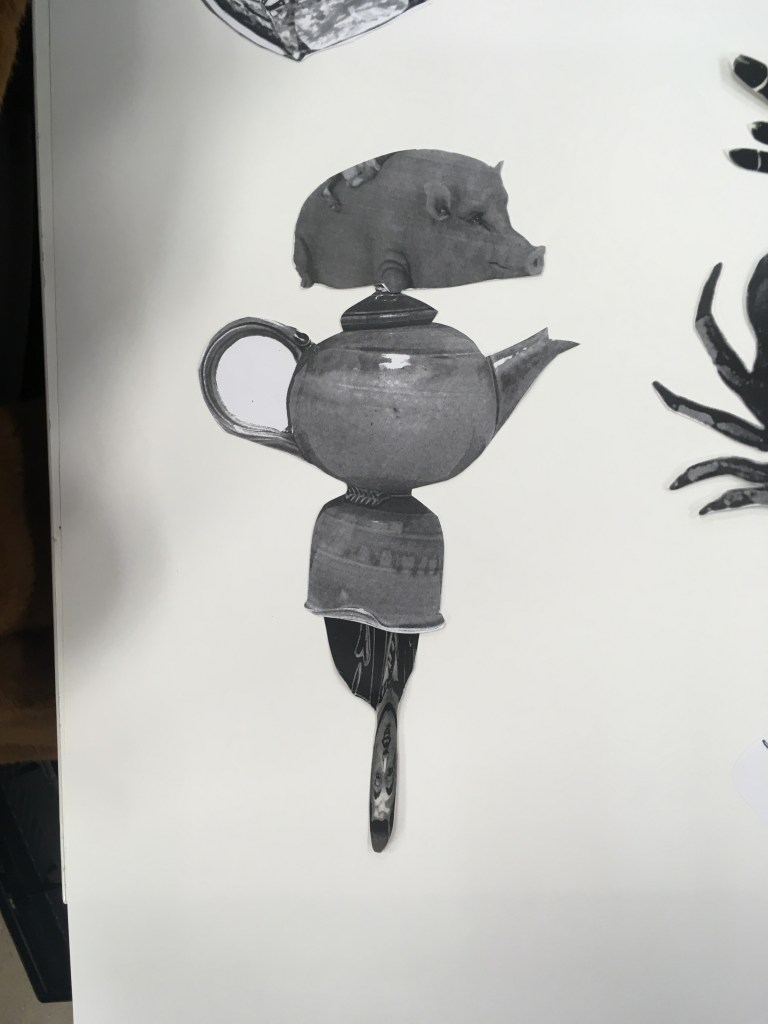
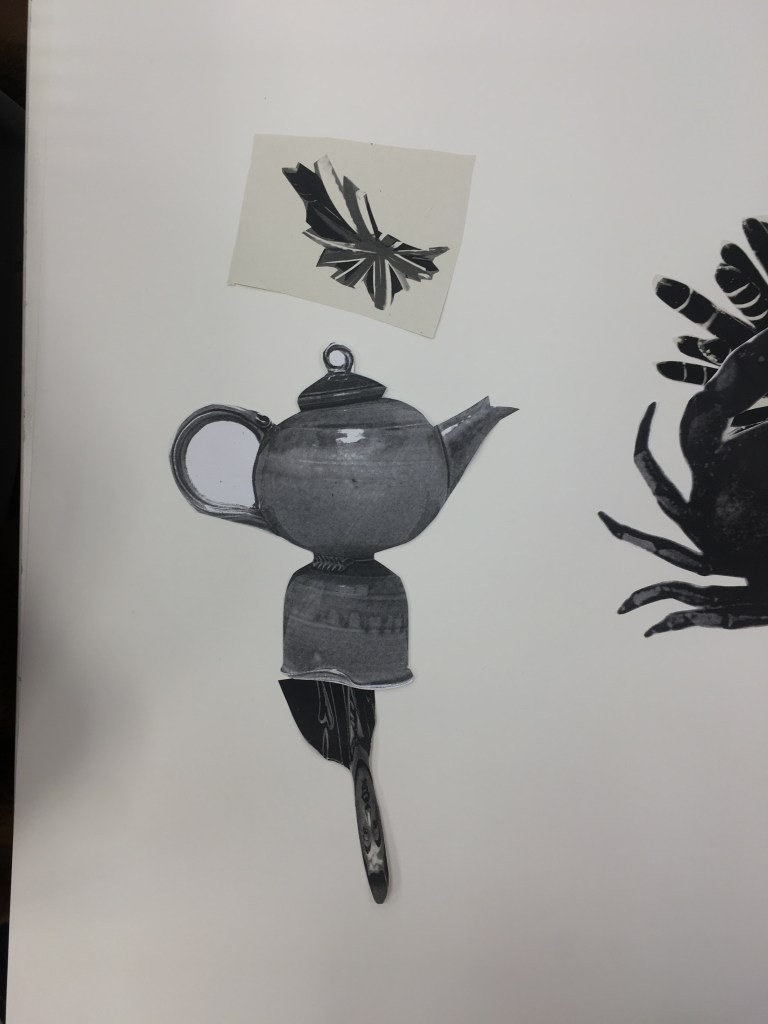
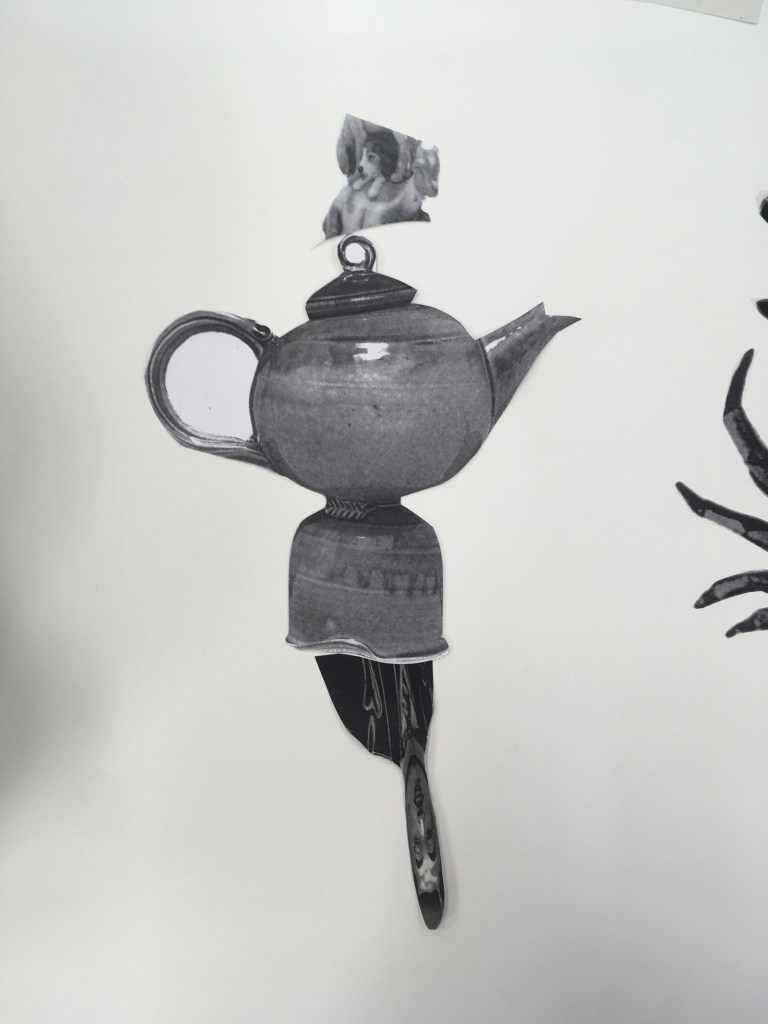
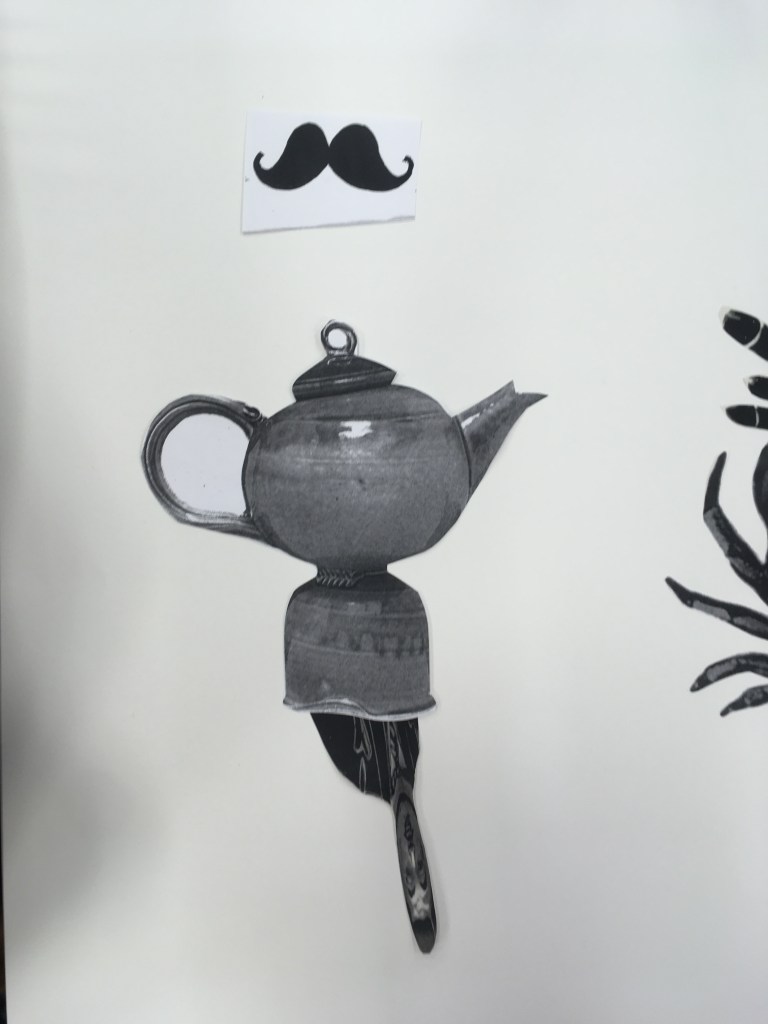
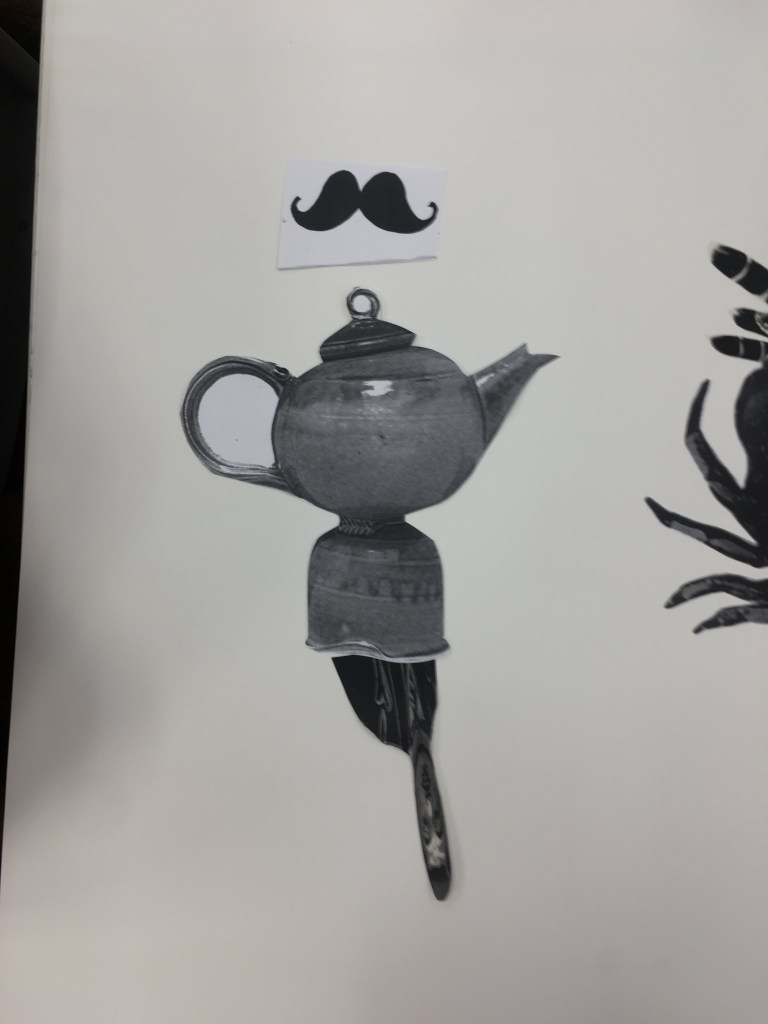
In this workshop, we collaborated as a group in generating lots of images and drawings of objects that could signify body parts – these were all photocopied and scaled in various ways to give us uniformly black and white copies. We were then tasked to create a series of characters with these body parts in collage.

The final works I created are shown above – at the end of the workshop we walked around looking at each other’s work and came together for a brief critique, where we picked out ones we thought worked well and why. My image of the kettle with the moustache (left most on the right hand image) was picked out by several peers as being interesting, for seeming in motion, or suggesting a gesture of dance, due to how I had placed the different pieces at different angles.

There were some forms I was immediately drawn to, and for the middle figure, the two objects that form it seemed to come together perfectly in the first instant. This is the only character for whom I did not go through an iterative process. I especially like how off balance but simultaneously complete it strikes you.

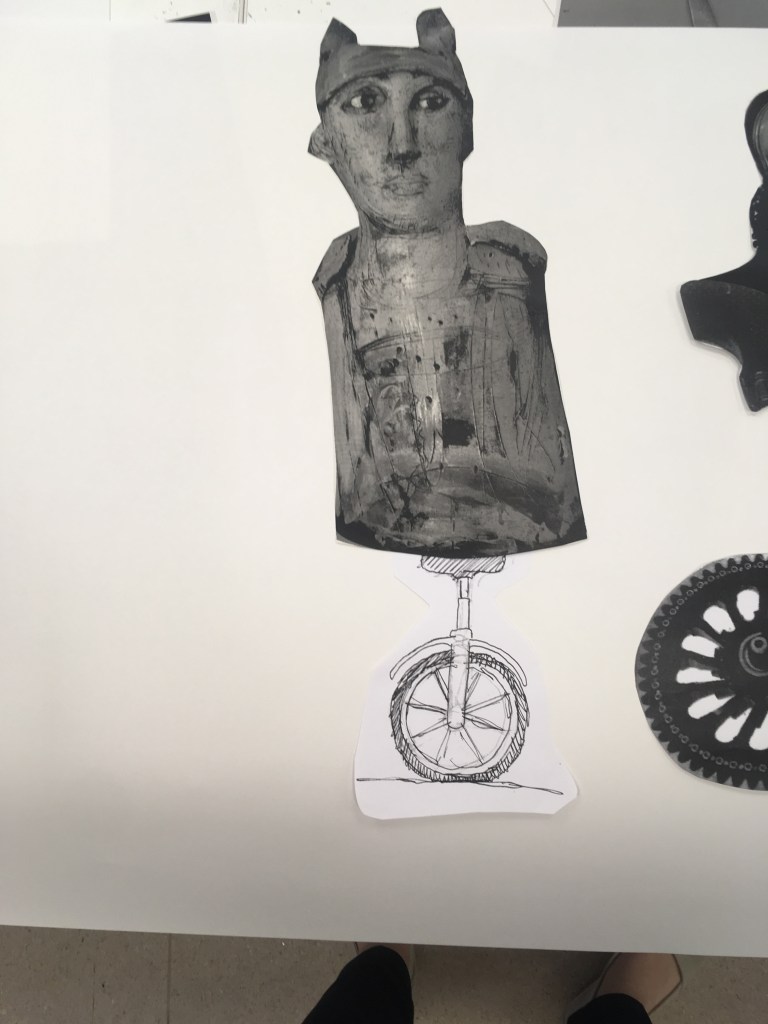
For the left hand figure here, I was keen to make use of this folk icon sculpture, particularly due to the interesting form and large scale. I wanted to play with this sense of solidity with a small or off-balance leg so experimented with a few options.

Meanwhile on my second sheet, I liked this other lamp shape for other legs, and also the teapot, but didn’t feel they quite worked together in an interesting way. The middle figure I felt had a bit too much going on, though I was interested in incorporating the eyes somehow – I liked them being detached here from the body itself.

I enjoyed this exercise especially. I think my most successful figures used shapes and forms that I had not myself selected from the material, and I found this allowed me some ‘distance’ to objectively select what I found to be most interested and explore different combinations more easily. The forms I had found (the crab, the lampshades) perhaps did not do as successfully because I had a bias to ensuring they were used and so perhaps working them in where they might not have been entirely best suited? I do like all my figures but I think some (the teapot, the wheel) are more complete than others.

Play – Unconventional Bodies: my work

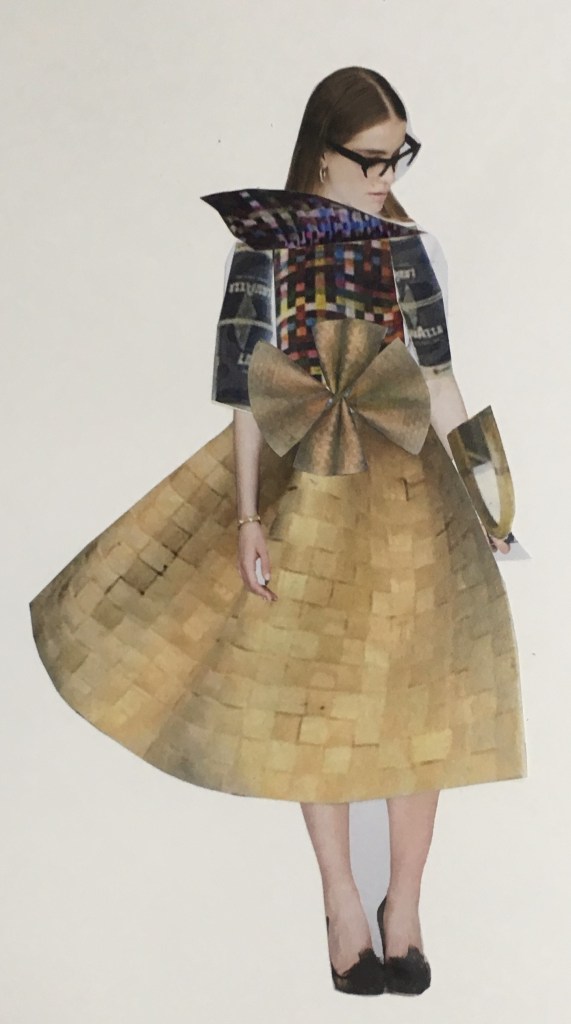
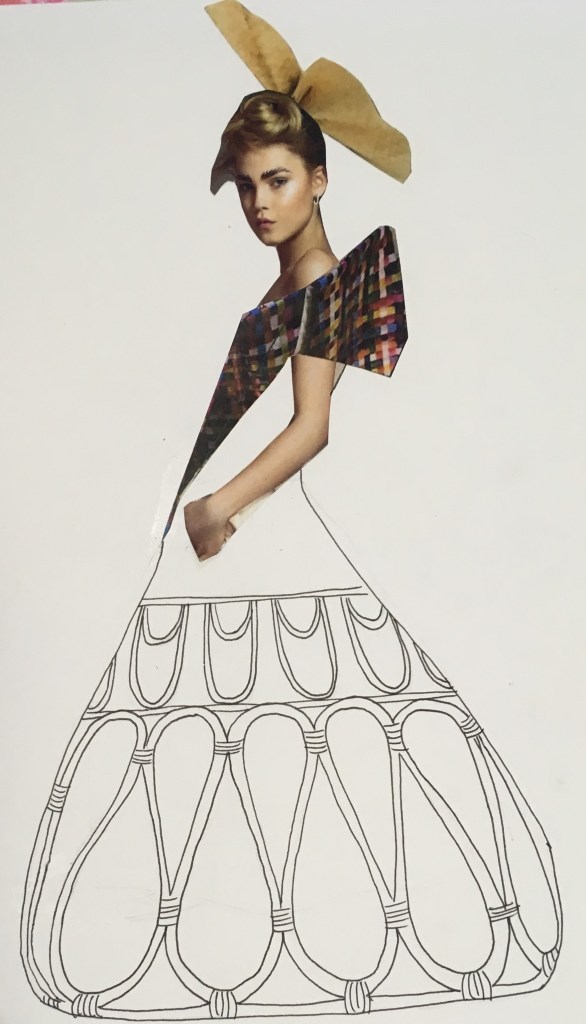
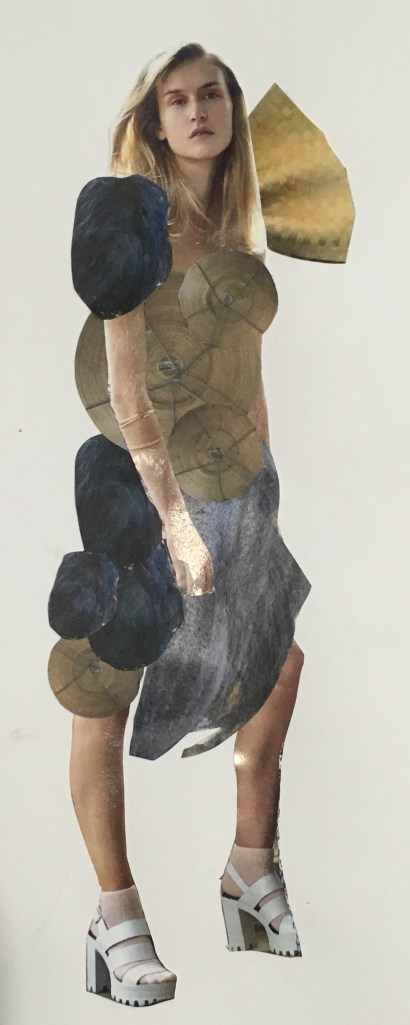
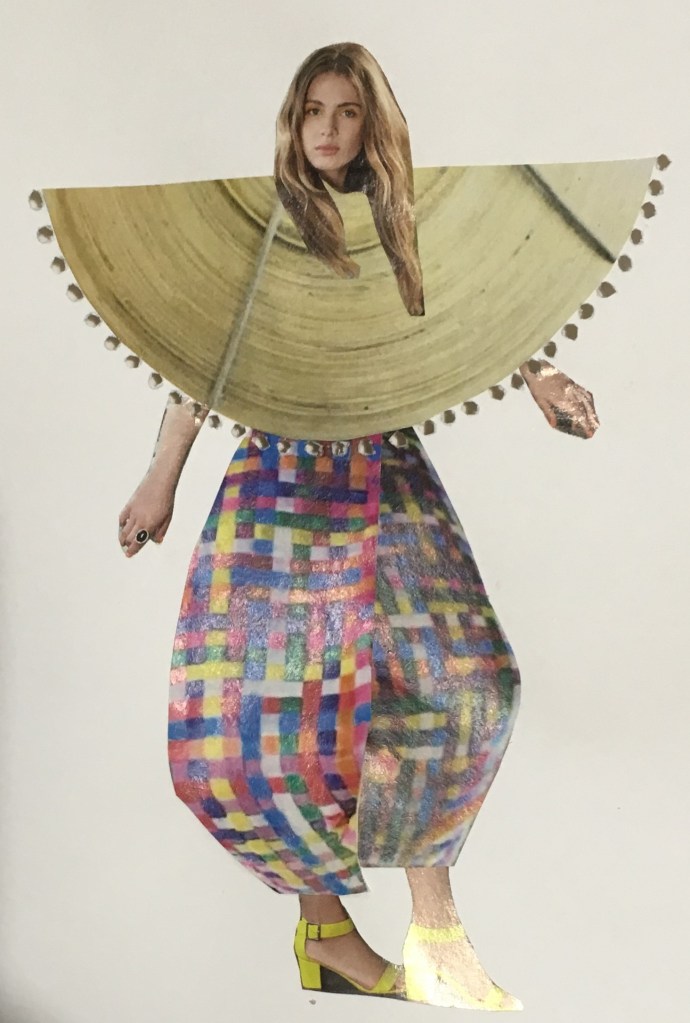
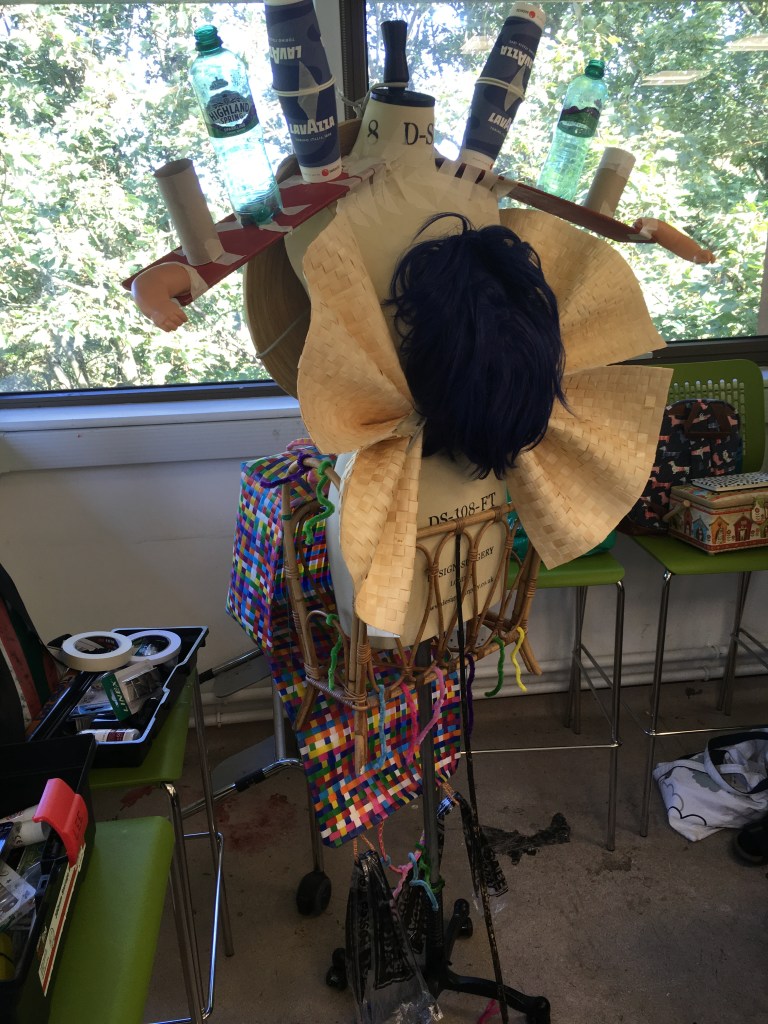
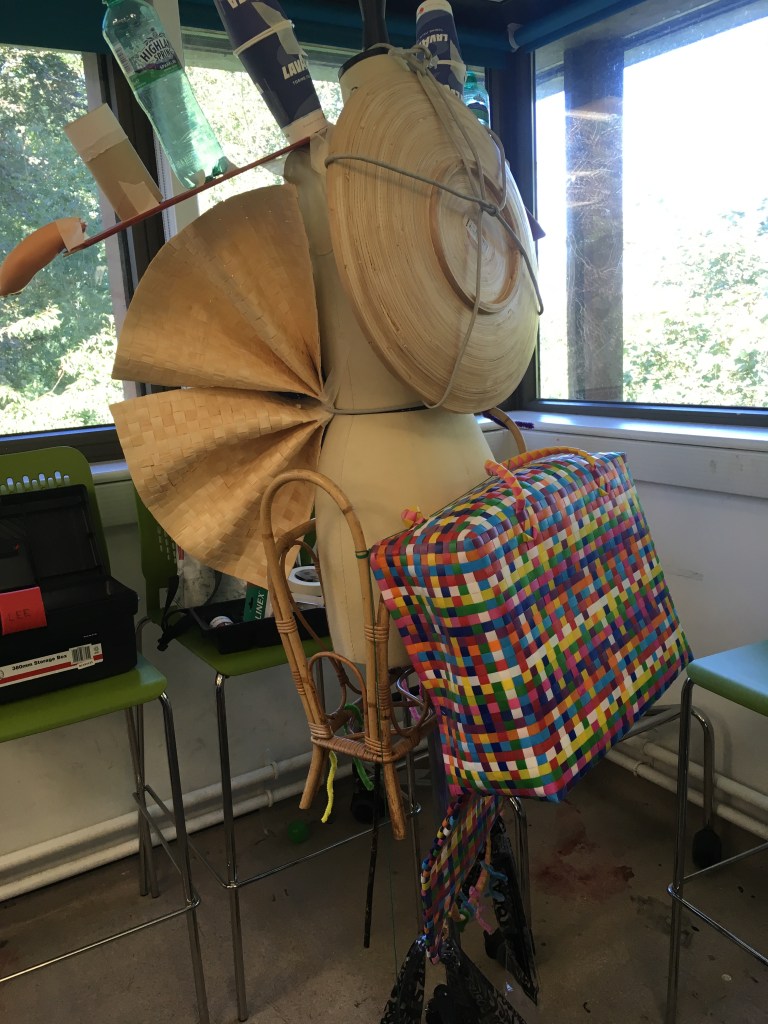
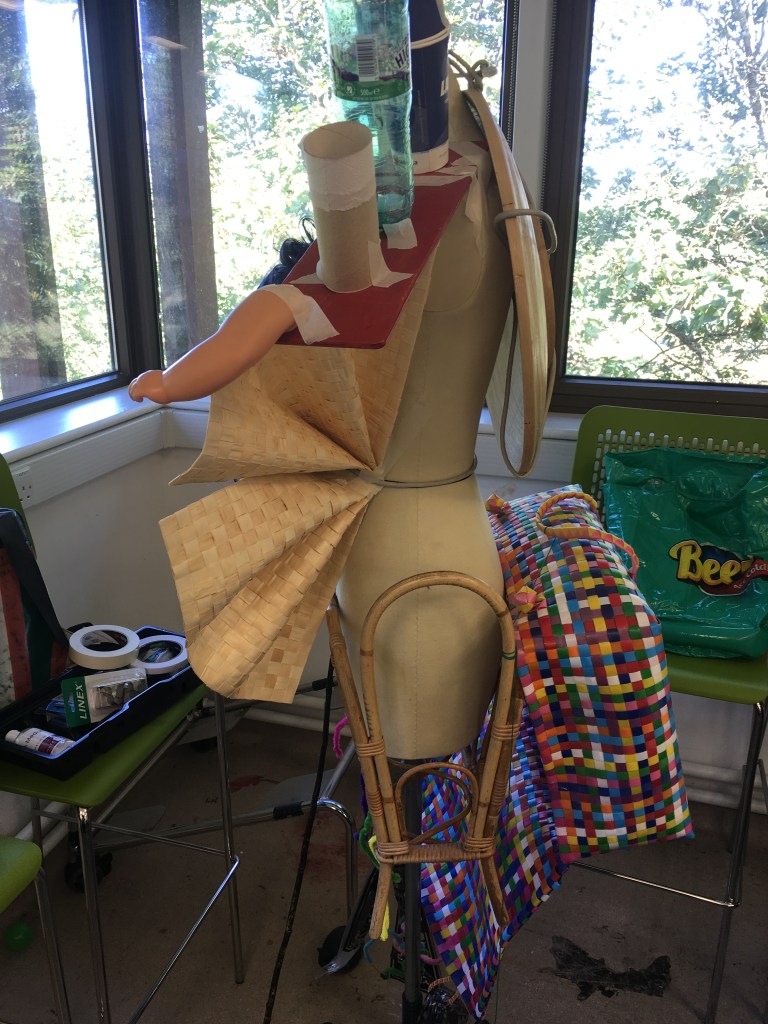
In this workshop, we had been briefed to bring in objects and in teams of 3 we pooled our objects and constructed these onto a mannequin, the shapes of which were to inspire a fashion series in a sketchbook.

One thing that I think worked well in the physical construction exercise, was use of the unusual shapes and contrasts between the different objects. I found it difficult to see this as a complete structure however with so much of the mannequin visible once it was completed. I think perhaps if we had deconstructed the objects, or used something additional that was more fluid that we could have done this?
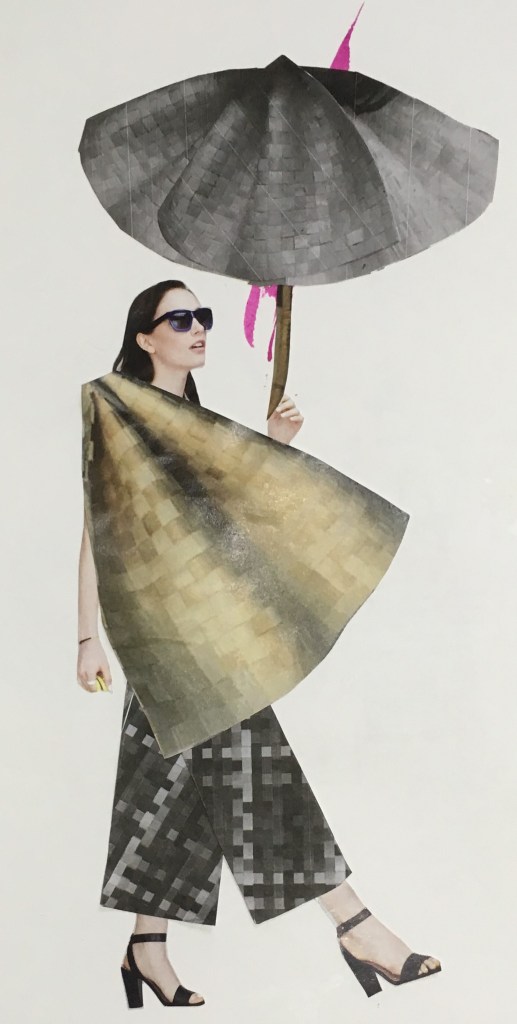
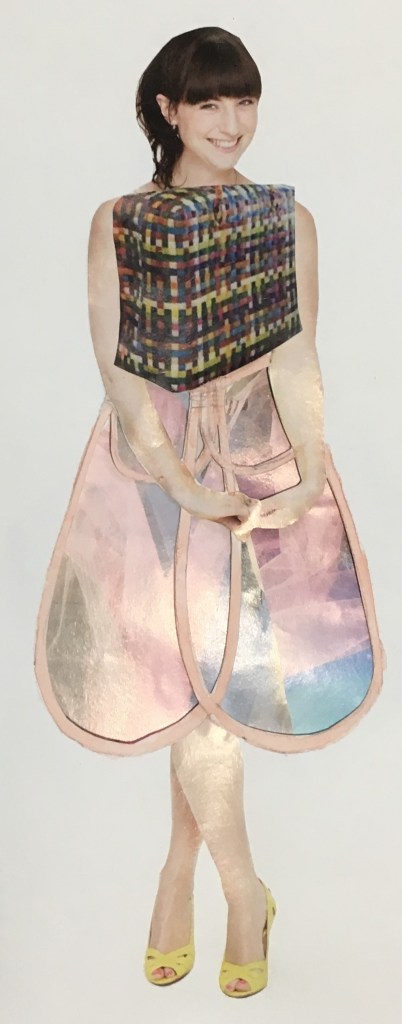
I preferred engaging with the collage exercise in developing my own series however. Here I had a little more freedom to experiment without being limited to the rudimentary construction techniques at hand in the physical task. I could also experiment further with scale and focus on the shapes that particularly interested me.
The shapes/objects I returned to most was the fan/pleats created from the woven placemats, which I variously used as accessory and detailing, but also scaled up as top and skirt in different outfits. This object with shading and curvature the most suggested an interesting 3D structure in my photographs so I found it interesting to experiment with this, particularly since the original object is in fact flat.

I was also interested in using the flat shape of the circle as photographed from the bowl/plate. This because we are so used to seeing circles as balls/spheres, I liked playing with expectations here. It provided a suggestion of structure and rigidity to some of the outfits, which I liked in the armour-like plating in outfit 4, and the egyptian flat style of outfit 5. And I liked playing with the idea of flatness in outfit 6 along with the semi-corsetry from the rattan magazine cover.

So this contrast of 2D and 3D was interesting – particularly since the exercises were themselves reflecting on this transition.

Design a site like this with WordPress.com
Get started